
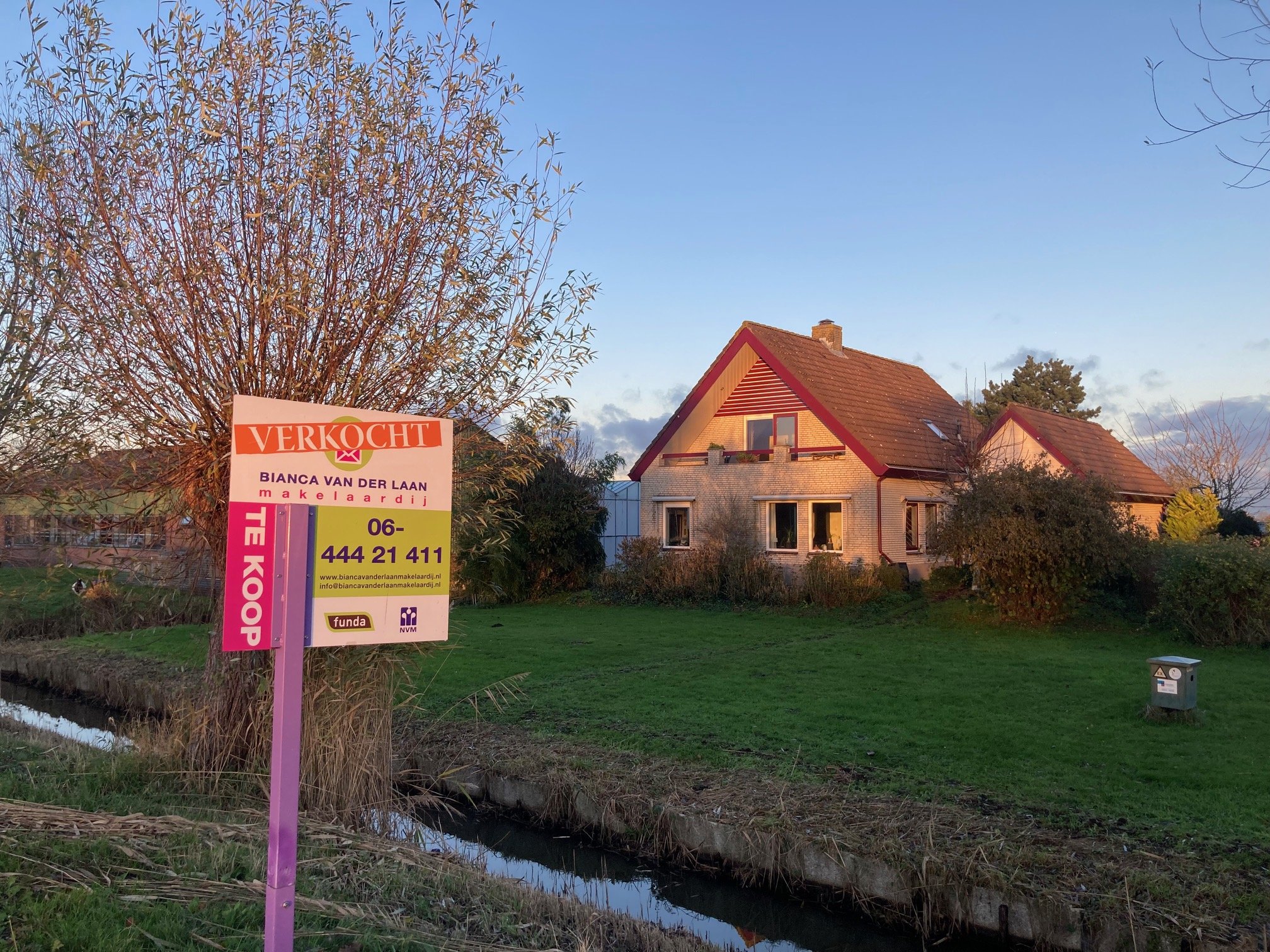
Myths About Moving to the Netherlands: What Americans Should Know Before They Arrive
From the outside, moving to the Netherlands can look remarkably easy.
English is widely spoken. Public transportation is excellent. Dutch cities are beautiful and highly organized. For Americans who want to establish a business, the Dutch-American Friendship Treaty—usually shortened to DAFT—can also provide an attractive residence pathway.
So perhaps the plan is simple: pack a few suitcases, find an apartment, buy a bicycle, and start your new European life.
Well—not quite.
After nearly twenty years living in the Netherlands as a student, university lecturer, entrepreneur, homeowner, husband, father, and Dutch citizen, I have watched many Americans arrive with a version of that expectation. I understand it. The Netherlands can feel surprisingly accessible from the United States.
But accessible does not mean effortless.
The country works extremely well precisely because it has systems, rules, procedures, and expectations. Learning how those systems fit together is part of relocation. Learning how Dutch people live, communicate, socialize, and participate in their communities is part of integration.
Those are two different challenges.
At Dutch Landing, we believe successful relocation requires both.
Here are three of the most persistent myths Americans should understand before moving to the Netherlands.
Myth #1: “Moving to the Netherlands Is Easy”
The Netherlands is organized.
That does not necessarily mean it is simple.
In fact, one of the first surprises many Americans encounter is how interconnected Dutch administrative processes can be.
Depending on your circumstances, your move may involve immigration, housing, municipal registration, obtaining a BSN, arranging health insurance, applying for a DigiD, opening bank accounts, dealing with taxes, registering a business, finding schools, and arranging healthcare.
Each process is manageable.
The difficulty is often understanding what needs to happen, when it needs to happen, and what depends upon something else happening first.
The official Netherlands Worldwide checklist for moving to the Netherlands is a useful place to see just how many practical issues can accompany relocation, from residence rights and documents to employment, registration, insurance, and family considerations.
This is also why we explored the importance of preparation in our Dutch Landing article, The Need for Expert Advice When Relocating to the Netherlands. The information is often available. The challenge for newcomers is knowing which information applies to their particular situation.
DAFT Is a Pathway, Not a Complete Relocation Plan
For Americans, DAFT is a good example.
The Dutch-American Friendship Treaty provides qualifying American entrepreneurs with a route to residence as self-employed persons. The IND currently states that, for most common business forms, applicants under the treaty must invest at least €4,500 in their business.
That can make the Netherlands unusually accessible to Americans who genuinely intend to operate a business here.
But DAFT does not:
find your housing;
register you with your municipality;
choose your health insurance;
open your bank accounts;
navigate your tax obligations;
arrange schooling for your children;
teach you how Dutch business culture works;
or build a social network for you.
A residence permit gives you the legal framework to live here.
It does not create your Dutch life for you.
The official IND self-employed residence permit page should always be the starting point for current immigration requirements.
Preparation Changes the Experience
Most relocation problems are not disasters.
They are usually smaller complications that accumulate.
An appointment cannot be made yet.
A document needs an apostille.
A landlord wants information you did not expect to provide.
Your health insurer asks for your BSN.
You need your DigiD to access another government service.
Your child needs school placement.
None of these things means the Netherlands is impossibly bureaucratic.
They mean that moving internationally requires a sequence.
Understanding that sequence before you arrive turns a collection of surprises into a plan.
That is the real difference between an “easy” move and a manageable one.
Myth #2: “Everyone Speaks English, So I Don’t Need Dutch”
This myth is particularly tempting because it contains so much truth.
You can accomplish an extraordinary amount in English in the Netherlands.
You can work in international companies, order in restaurants, attend medical appointments, shop, travel, and manage many aspects of daily life without speaking fluent Dutch.
For a newly arrived American, that is enormously helpful.
It also creates a trap.
Functioning in the Netherlands and integrating into the Netherlands are not the same thing.
English can help you avoid immediate isolation.
Dutch helps you move beyond it.
Language Changes Your Relationship With the Country
Learning Dutch gives you access to parts of life that are much harder to experience from an English-speaking bubble.
You begin understanding conversations happening around you.
You can speak more naturally with neighbors.
School correspondence becomes less intimidating.
Local clubs and associations become more accessible.
You understand jokes, advertisements, announcements, signs, and cultural references without needing everything translated.
Perhaps most importantly, learning Dutch sends a message.
It says:
I am not simply asking the Netherlands to accommodate me. I am making an effort to participate.
You do not need fluency on Day One.
Nobody sensible expects that.
But effort matters.
The Dutch government itself links civic integration with learning Dutch and gaining knowledge of Dutch society, although formal civic-integration obligations depend on an individual’s nationality and residence circumstances. You can read the current official framework on the Government of the Netherlands civic integration page.
Dutch Landing uses the word integration more broadly than the legal inburgering requirement.
For us, integration means developing the skills, relationships, confidence, and cultural understanding needed to participate in Dutch society successfully.
Language is one of the strongest tools for doing that.
Myth #3: “Integration Will Happen Automatically”
This may be the biggest myth of all.
There is a natural assumption that if you live somewhere long enough, you will eventually become part of it.
Sometimes that happens.
Often, it does not.
It is entirely possible to spend years in the Netherlands while working almost entirely in English, socializing mainly with other internationals, consuming American media, shopping at familiar international stores, and having relatively little contact with Dutch community life.
You can be physically present in the Netherlands without ever feeling fully connected to it.
That is why integration requires intention.
Integration Is Built Through Small Decisions
People sometimes imagine integration as a dramatic transformation.
It usually looks much more ordinary.
Learn some Dutch.
Introduce yourself to the neighbors.
Join a sports club or vereniging.
Cycle instead of automatically reaching for the car.
Attend the neighborhood borrel.
Go to King’s Day.
Volunteer at your child’s school.
Shop at the local market.
Try the unfamiliar food.
Accept an invitation even when you are tempted to stay home.
None of those individual actions will suddenly make you Dutch.
Together, over time, they change your relationship with the country.
In our article on raising children in the Netherlands, we discuss how especially important this can be for families. Children often develop confidence and belonging through local schools, friendships, sports, and neighborhood life. Parents who actively engage with Dutch society help reinforce that process.
The same principle applies to adults.
Integration grows through participation.
Comfort Can Become an Expat Bubble
There is nothing wrong with having international friends.
Some of my longest friendships began among the roughly 1,000 international students who arrived alongside me nearly twenty years ago.
International communities can provide enormous support. They understand the frustrations and absurdities of relocation because they are experiencing them too.
The danger comes when that community becomes your only community.
English-speaking bubbles are comfortable precisely because they require very little adjustment.
But if your goal is to make the Netherlands your long-term home, some discomfort is productive.
You need situations where you do not understand everything immediately.
You need Dutch conversations where you miss a word.
You need the first slightly awkward neighborhood gathering.
You need to learn why everyone checks their agenda before committing to coffee three weeks from Thursday.
Those experiences gradually stop feeling foreign.
That is integration.
Our recent Dutch Landing article on making friends in the Netherlands explores the same idea from a social perspective: meaningful relationships here often develop through repeated participation rather than instant connection.
Everyday Dutch Life Is Where Integration Happens
One reason I encourage newcomers to get on a bicycle early is that cycling immediately places you inside Dutch daily life.
You stop experiencing the Netherlands only as a visitor moving between destinations.
You begin experiencing neighborhoods.
Schools.
Markets.
Parks.
Train stations.
Rain.
Rush hour.
The highly organized chaos of a Dutch bike lane at 8:15 in the morning.
That may sound trivial, but it is not.
Daily routines teach you how a society works.
Our article on Dutch weather makes a similar point. Eventually, the rain stops feeling like an unfortunate Dutch inconvenience and becomes something you simply live with—perhaps while checking Buienradar and deciding whether you can make it to Albert Heijn before the next shower.
That shift matters.
The country stops being something you are observing.
It becomes the place where your ordinary life happens.
Healthcare Is Another Good Example
Americans sometimes assume that because Dutch institutions are modern and English-friendly, they will work roughly like their American equivalents.
Healthcare quickly disproves that assumption.
The Dutch huisarts plays a much more central role than many Americans expect. Health insurance works differently. Referrals work differently. Prescribing culture can feel different.
None of those differences makes the Dutch system better in every imaginable situation—or worse.
It simply makes it Dutch.
Understanding that distinction is part of integration.
Our guide to Dutch healthcare for American expats goes into the practical details, but the larger lesson applies to almost every part of relocation:
Do not assume familiar-looking systems operate according to American expectations.
Learn how the Dutch system works first.
Then learn how to work within it confidently.
The Dutch Landing Difference
This is where Dutch Landing approaches relocation differently.
Visas matter.
Housing matters.
Registration matters.
A BSN matters.
Health insurance matters.
We help clients understand those practical systems because you cannot build a stable Dutch life without getting the fundamentals right.
But we do not believe relocation ends when the paperwork is finished.
Founder Dr. Erik Olsen has spent nearly twenty years in the Netherlands as an American immigrant, graduate student, academic, university lecturer, entrepreneur, homeowner, husband, father, and eventually Dutch citizen.
That experience taught me something that no government checklist can teach:
Feeling at home takes participation.
You learn the bureaucracy.
Then you learn the culture.
You learn the language.
You meet your neighbors.
You understand how schools work.
You discover what a borrel actually is.
You get caught cycling in the rain.
You begin recognizing people in your neighborhood.
Hundreds of small experiences accumulate.
And somewhere along the way, the Netherlands stops feeling like the country you moved to.
It starts feeling like home.
That is why integration is not an afterthought at Dutch Landing.
It starts on Day One.
Other organizations help Americans move to the Netherlands.
Dutch Landing helps create Future Dutchies.
Frequently Asked Questions About Moving to the Netherlands
Is moving to the Netherlands easy for Americans?
Americans have several potential immigration routes, including residence as a highly skilled migrant, through family circumstances, or as a qualifying self-employed entrepreneur under DAFT. But immigration eligibility is only one part of relocation. Housing, registration, healthcare, taxation, banking, and everyday integration still require planning.
What is DAFT?
DAFT is the Dutch-American Friendship Treaty. It can allow qualifying US citizens to obtain residence in the Netherlands for self-employment under specific conditions. Applicants should always check the current requirements directly with the IND before making plans.
Can I live in the Netherlands without speaking Dutch?
Yes, particularly in larger cities and international workplaces. However, relying exclusively on English can limit deeper participation in neighborhood, social, school, and community life. Learning Dutch can significantly improve long-term integration.
Does integration happen naturally if I live in the Netherlands long enough?
Not necessarily. Time helps, but participation matters more. Joining local activities, learning some Dutch, building relationships, understanding cultural expectations, and engaging with the community are much more likely to create a sense of belonging.
When should I start preparing for integration?
Before you arrive.
You do not need to speak fluent Dutch or understand every cultural custom. But approaching the move with the goal of participating in Dutch society from Day One makes a significant difference.
Moving Gets You Here. Integration Makes It Home.
The Netherlands can be an extraordinary place to build a life.
But moving here is not effortless.
English will help you enormously, but it will not replace integration.
And simply living inside Dutch borders will not automatically create a sense of belonging.
Successful relocation happens when practical preparation and cultural participation work together.
Get the paperwork right.
Learn how the systems work.
Then go beyond them.
Learn some Dutch.
Get on the bicycle.
Meet your neighbors.
Join something.
Help your children participate.
Say yes to the borrel.
Give yourself permission to feel uncomfortable sometimes.
After nearly twenty years here, I have learned that home is not something immigration authorities grant you.
It is something you build.
At Dutch Landing, that is exactly what we help Americans do.
If you are considering moving to the Netherlands and want a clearer understanding of both the practical relocation process and the longer-term path toward integration, visit Dutch Landing or contact info@dutchlanding.nl.
Because relocation gets you to the Netherlands. Integration helps make it home.
Your Move, Made Easy.
Making Friends in the Netherlands: Why Integration Begins with Relationships
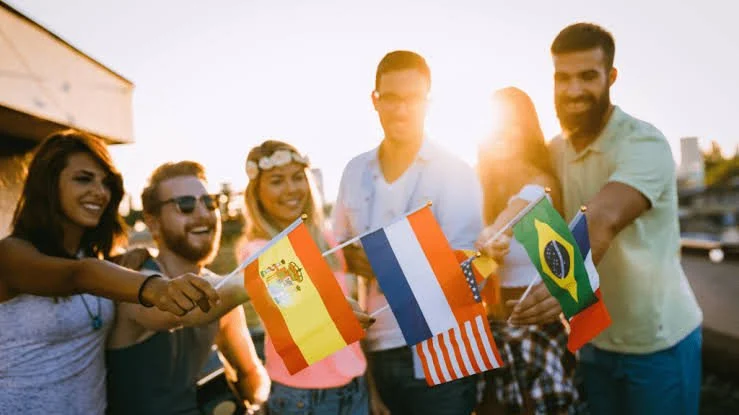
Dutch and international friends socializing together while making friends in the Netherlands.
Here is a confession: when I first arrived in the Netherlands, I got lucky.
I came as a graduate student, and roughly 1,000 other international students arrived in the same city, at the same university, and—in many cases—even in the same housing complex. We were all wide-eyed, slightly overwhelmed, and trying to understand the same unfamiliar country at the same time.
We were thrown together by circumstance.
Friendships formed quickly because none of us knew exactly what we were doing. We explored the city together, compared notes about Dutch culture, struggled through administrative appointments, and laughed about the many small misunderstandings that come with starting over in another country.
Some of the friendships born during those first days are still part of my life nearly twenty years later.
Since then, I have become a Dutch citizen, learned the language, built a career, started a family, bought a home, and become part of my local community. Today, I regularly have borrels with neighbors who are both Dutch and international.
But most people moving to the Netherlands do not arrive with a ready-made group of friends.
You might arrive alone or with your partner and children on a random Tuesday in March. There may be no orientation week, no student housing, and no hallway full of newcomers who are just as eager to meet people as you are.
Instead, there is a moving truck, a stack of paperwork, and an entirely new country waiting outside your front door.
That raises a question nearly every newcomer eventually asks:
How do you actually make friends in the Netherlands?
The honest answer is that it is absolutely possible—but it often takes longer, requires more consistency, and works differently than many Americans expect.
Why Making Friends in the Netherlands Can Feel Difficult
Relocation creates an unusual social problem.
You leave behind friendships that took years—or even decades—to build, but you arrive expecting to create replacements within a few months.
That is rarely realistic.
Back home, your social network may have included childhood friends, university classmates, colleagues, neighbors, relatives, parents from your children’s school, and people you met through hobbies or community organizations.
Those relationships were not created all at once. They accumulated gradually through repeated contact and shared experiences.
When you move abroad, that entire social structure disappears overnight.
You may be surrounded by people every day and still feel lonely. You can have friendly conversations with colleagues, exchange greetings with neighbors, and attend an expat meetup without feeling that you have built a genuine friendship.
This distinction matters because friendliness and friendship are not the same thing.
Dutch people are often polite, helpful, and direct. A colleague may assist you at work. A neighbor may accept a package for you. Another parent may chat pleasantly at the school gate.
Those interactions are valuable, but they do not automatically mean you have entered someone’s private social circle.
For Americans accustomed to spontaneous invitations and quick expressions of friendship, this can feel discouraging. In reality, the Dutch person may simply define friendship more cautiously.
Dutch Friends and Expat Friends Are Different Social Experiences
One of the first things newcomers discover is that “expat friends” and “Dutch friends” can feel like two very different games.
Neither is better. Both offer something important.
Why Expat Friendships Form Quickly
International friendships often begin rapidly because newcomers share an immediate bond.
You are all navigating similar challenges:
finding housing;
understanding Dutch bureaucracy;
learning how healthcare works;
adjusting to the weather;
missing food, family, or traditions from home;
and trying to understand why your Dutch agenda seems to control your entire life.
Shared confusion is a remarkably effective icebreaker.
Expat friends may quickly become the people you call when you need advice, want to explore a new city, or simply need to talk to someone who understands what it feels like to start again.
These friendships can be deeply meaningful. My own life is proof of that.
But international friendships can also carry a degree of uncertainty.
One friend’s work contract may end. Another may return home for family reasons. Someone else may relocate to another European country. Even people who intend to remain in the Netherlands sometimes discover that life takes them elsewhere.
That does not make these friendships less valuable. It simply means that international social circles can be more fluid.
Why Dutch Friendships Often Develop Slowly
Dutch friendships often follow a different pattern.
Many Dutch adults have social circles that stretch back to school, university, their neighborhood, a sports club, or a student association. Those relationships may already fill much of their available social time.
This is especially important in a culture where personal agendas are taken seriously.
A Dutch person may genuinely want to see you and still suggest a date three weeks from now. That does not necessarily indicate a lack of interest. It may simply mean their existing commitments are already carefully scheduled.
The Dutch also tend to distinguish clearly between colleagues, acquaintances, neighbors, and close friends. Crossing from one category into another usually happens gradually.
You may have coffee several times before being invited home. You may attend numerous sports practices before joining a team gathering. You may chat with a neighbor for months before a spontaneous conversation becomes a regular borrel.
To Americans, that pace can feel frustrating.
But there is an encouraging side to it: once a Dutch friendship becomes established, it can be remarkably steady and enduring.
The Dutch Are Not Necessarily Unfriendly
You will often hear frustrated newcomers say, “The Dutch do not want new friends.”
I understand why people reach that conclusion, but I do not think it tells the whole story.
Dutch people are not a single personality type, and experiences vary enormously by age, city, workplace, family situation, and individual temperament.
Still, there is truth behind the perception that entering an established Dutch social circle can be difficult.
The key is understanding that resistance is not always rejection.
A Dutch colleague who does not immediately invite you home may not be uninterested in friendship. A neighbor who keeps conversations brief may simply respect privacy. A parent at school who checks their agenda before accepting an invitation may genuinely need to schedule social activities carefully.
Dutch social culture often places less emphasis on instant emotional closeness and more emphasis on reliability.
Do you show up when you say you will?
Do you participate regularly?
Do you contribute to the group?
Do you remember the next meeting, practice, or neighborhood event?
Friendship frequently grows from those repeated demonstrations of dependability.
Consistency Beats Intensity
This may be the most useful advice I can offer anyone making friends in the Netherlands:
Consistency beats intensity.
One enthusiastic evening at an expat event can be enjoyable, but it rarely creates a lasting social network.
Friendships are more likely to grow when you see the same people repeatedly.
That is why structured activities work so well. They remove the pressure of having to manufacture an instant connection. Instead, you become familiar to one another over time.
You talk before class.
You cycle home after practice.
You help organize an event.
You share coffee after a meeting.
Gradually, an acquaintance becomes someone you know. Someone you know becomes someone you trust. Eventually, that person may become a friend.
This slow process can feel unfamiliar, but it is also how many meaningful relationships develop.
Join a Vereniging
One of the most effective ways to meet people in the Netherlands is to join a vereniging—an association or club built around a shared activity.
The Netherlands has an enormous culture of organized associations. There are clubs for football, hockey, tennis, rowing, running, music, theatre, gardening, board games, photography, cycling, and almost any other interest you can imagine.
A vereniging is not simply a place where people consume a service. Members are often expected to participate in the life of the organization.
That may include helping at events, volunteering for small tasks, attending meetings, or contributing to club activities.
For newcomers, this is incredibly valuable.
You are not trying to force a friendship with a stranger. You already have a shared interest and a reason to meet regularly.
Amsterdam’s official international information platform similarly recommends hobbies, sports clubs, workshops, and Dutch classes as practical routes to meeting people and becoming more connected.
Do not worry if the first few meetings feel awkward. That is normal.
Keep going.
Friendship often begins after people have seen you enough times to stop viewing you as “the new person.”
Learn Dutch—even When Everyone Speaks English
You can live much of your life in the Netherlands using English, particularly in larger cities and international workplaces.
But learning Dutch changes the quality of your experience.
Language gives you access to informal conversations, neighborhood humor, local news, sports clubs, parent groups, and the small social moments that do not always happen in English.
You do not need to wait until you are fluent.
Even making the effort matters.
Using a few Dutch sentences with a neighbor signals that you want to participate in local life rather than expecting everyone else to adapt to you. A language course can also introduce you to other newcomers who are facing the same challenges.
Official civic integration policy places significant emphasis on learning Dutch and participating in society, although the formal integration requirements vary according to nationality and residence status.
At Dutch Landing, we view language learning as more than an administrative requirement.
It is an invitation into the culture.
Say Yes to the Neighbor’s Borrel
Friendship opportunities in the Netherlands are often easy to overlook because they may appear small.
A neighbor invites you for a drink.
Someone asks whether you want to attend a community event.
A colleague suggests having coffee after work.
Another parent mentions a school activity.
Say yes when you reasonably can.
The invitation may not immediately lead to a close friendship, but it creates another point of contact—and repeated contact is where relationships grow.
The Dutch word borrel is useful to understand. It usually refers to an informal social gathering with drinks and snacks. A borrel may be organized by colleagues, neighbors, parents, clubs, or friends.
It is rarely a dramatic social occasion.
That is precisely why it matters.
Integration is usually not built through grand gestures. It develops through ordinary evenings, familiar faces, and conversations that gradually become more personal.
Parents Have Their Own Route into Community Life
For families, children can create natural connections to the surrounding community.
School introduces parents to teachers, classmates, neighborhood families, birthday parties, sports teams, and volunteer activities.
But these relationships still require participation.
Attend the school event.
Help with an activity.
Talk to other parents rather than leaving immediately.
Invite another family for coffee.
Encourage your children to participate in local clubs instead of relying entirely on international activities.
As discussed in our article Why Integration Matters When Raising Children in the Netherlands, children often integrate more successfully when families engage actively with Dutch society rather than attempting to recreate an American life overseas.
The same is true for parents.
A child’s football practice, school celebration, or neighborhood playdate can become the beginning of an adult friendship too.
Facebook Groups Are a Starting Point, Not the Destination
Online communities are useful.
They can answer practical questions, advertise meetups, introduce people with shared backgrounds, and help newcomers feel less alone.
I run a Facebook community myself, and I have seen how valuable these spaces can be for people preparing to move or navigating their first months in the Netherlands.
But online interaction is not a complete substitute for real community.
It is easy to join several groups, comment regularly, and still feel isolated.
Use online communities as bridges into offline life.
Attend the gathering.
Meet someone for coffee.
Join the group walk.
Go to the language exchange.
Follow up after the event.
The goal is not merely to increase the number of names on your social-media account. It is to create people you can call, visit, help, and rely upon.
Do Not Build Only an Expat Bubble
There is nothing wrong with having international friends.
In fact, they may become some of the most important people in your life.
The risk comes when your entire social world remains disconnected from the country in which you live.
An expat bubble can be comfortable. Everyone understands your frustrations. You can speak English, share familiar cultural references, and avoid the awkwardness of entering Dutch spaces.
But comfort can quietly become isolation.
Years may pass without your Dutch improving, without knowing your neighbors, and without feeling connected to local society.
Successful integration does not require abandoning your identity or giving up international friendships.
It means expanding your world.
You can celebrate Thanksgiving and attend King’s Day.
You can speak English at home and learn Dutch for your community.
You can maintain international friendships while gradually developing Dutch ones.
The strongest social lives I see among long-term internationals usually include both.
Expect Some Friendships Not to Work
Making friends as an adult involves rejection everywhere, not only in the Netherlands.
Some invitations will not be returned.
Some acquaintances will remain acquaintances.
Some friendships will fade when jobs, schools, or neighborhoods change.
An expat friend may move away. A Dutch colleague may prefer to keep work and private life separate. A club may simply not be the right fit.
Do not interpret every disappointing interaction as proof that integration is impossible.
Building a social network requires experimentation.
Try another activity.
Speak to another neighbor.
Join a different group.
Volunteer somewhere that reflects your interests.
The aim is not to make everyone your friend. It is to find the people and communities where repeated contact can grow into mutual trust.
Friendship Is Part of the Relocation Process
Relocation services often focus almost entirely on practical milestones:
securing a residence permit;
finding housing;
registering with the municipality;
obtaining a BSN;
arranging health insurance;
opening a bank account;
and enrolling children in school.
Those steps are essential. Netherlands Worldwide provides a useful official checklist covering many of the arrangements required before and after moving.
But completing a checklist does not automatically create a life.
You can have the correct residence permit, a beautiful apartment, and a Dutch bank account—and still feel profoundly alone.
That is why social integration should not be treated as something to consider later.
It begins on Day One.
Learning your neighbor’s name matters.
Joining a club matters.
Practising Dutch matters.
Showing up repeatedly matters.
Friendship is not an optional extra added after relocation.
It is part of what makes relocation successful.
Twenty Years Later
Nearly twenty years after arriving, my social life looks very different from that first international-student cohort.
Some friendships from those early days remain strong. Others faded naturally as people moved, changed careers, married, or returned home.
Over time, new relationships grew through work, family life, neighbors, language, and ordinary participation in Dutch society.
Today, my social circle includes Dutch people and internationals.
That balance feels natural to me.
It also reflects the life I built here—not overnight, but gradually.
There was no single moment when I became integrated. It happened through hundreds of small decisions: learning the language, staying for the second drink, attending another event, talking to a neighbor, accepting an invitation, and showing up again.
That is the honest truth about making friends in the Netherlands.
It can take longer than you expect.
But longer does not mean impossible.
The Dutch Landing Difference
At Dutch Landing, we help Americans manage the practical realities of moving to the Netherlands.
But our work is not limited to paperwork.
One of the most important questions clients ask is not about visas, housing, or registration.
It is:
“How do I actually build a life here?”
A successful move is not measured only by whether you arrive legally and complete the correct administrative steps.
It is measured by whether your family feels secure, connected, and increasingly at home.
Founder Dr. Erik Olsen has experienced this journey personally—as an American graduate student, university lecturer, entrepreneur, homeowner, husband, father, and Dutch citizen.
That lived experience shapes how Dutch Landing supports clients.
We understand the difference between arriving and belonging because we have made that transition ourselves.
Other organizations help Americans move to the Netherlands.
Dutch Landing helps create Future Dutchies.
Frequently Asked Questions
Is it difficult to make Dutch friends?
It can take time. Many Dutch adults already have established social circles, and they may distinguish carefully between acquaintances and close friends. Regular participation in a club, class, neighborhood activity, or volunteer organization gives relationships time to develop naturally.
Are Dutch people unfriendly?
Generally, no. Dutch communication can be direct, and Dutch people may be more reserved about inviting new acquaintances into their private lives. That can feel distant to Americans, but it should not automatically be interpreted as hostility or rejection.
Do I need to speak Dutch to make friends?
Not necessarily, particularly in international cities and workplaces. However, learning Dutch significantly expands your opportunities and demonstrates a willingness to participate in local society. Even basic Dutch can help create warmer connections with neighbors, clubs, and community groups.
Are expat groups a good way to meet people?
Yes. Expat communities can provide support, useful information, and immediate social contact. The strongest results usually come when online groups lead to repeated in-person activities rather than remaining entirely online.
What is the best way to meet Dutch people?
Join activities where you will encounter the same people regularly. Sports clubs, cultural associations, language courses, schools, neighborhood events, volunteering, and hobby groups are generally more effective than one-time networking events.
How long does it take to build a social circle?
There is no fixed timeline. Some friendships form quickly, while others develop over months or years. Focus less on speed and more on consistent participation. A few dependable relationships are more valuable than dozens of superficial contacts.
Conclusion: Integration Begins with Relationships
Making friends in the Netherlands is not always easy.
You may not arrive with 1,000 international students who are all searching for connection. You may arrive alone, with a partner, or with children whose needs immediately demand your attention.
There may be periods when you feel lonely, uncertain, or convinced that everyone else already has enough friends.
Keep showing up.
Join the club.
Take the language course.
Speak to the neighbor.
Attend the school event.
Accept the borrel invitation.
Invite someone for coffee.
Relationships take time because meaningful relationships always take time.
Eventually, the unfamiliar faces around you begin to become recognizable. Recognizable faces become acquaintances. Some acquaintances become friends.
And one day, perhaps without noticing exactly when it happened, the Netherlands stops feeling like the country you moved to.
It begins to feel like home.
Ready to Build Your Life in the Netherlands?
Moving to the Netherlands involves more than obtaining a visa, finding housing, and registering with the municipality.
It means creating routines, building relationships, understanding Dutch culture, and becoming part of a community.
Dutch Landing helps Americans approach relocation with clarity, confidence, and a plan for long-term integration—not just arrival.
For an official overview of the practical steps involved in relocating, consult the Netherlands Worldwide checklist for moving to the Netherlands.
To discuss your move and how Dutch Landing can help you build a successful Dutch life, visit Dutch Landing or contact info@dutchlanding.nl.
Your Move, Made Easy.
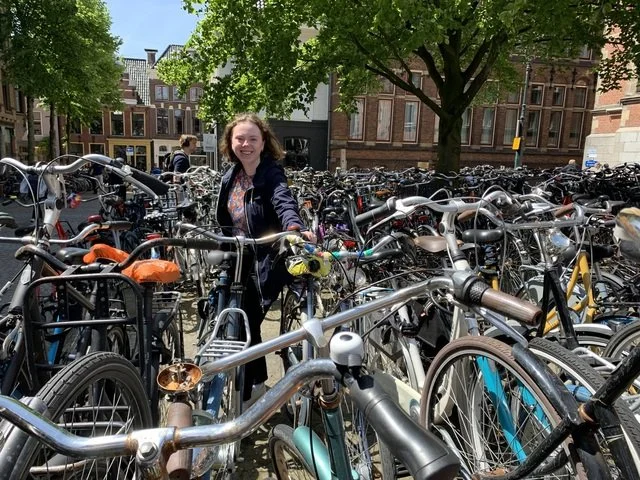
Cycling in the Netherlands: More Than Transportation—It's the Fastest Way to Feel Dutch
If you asked me what the fastest way is to start feeling like you belong in the Netherlands, my answer would probably surprise you.
It isn't getting your residence permit.
It isn't opening a Dutch bank account.
It isn't even learning Dutch.
It's getting on a bicycle.
That might sound overly simplistic, but after nearly twenty years living in the Netherlands—as a student, university lecturer, entrepreneur, homeowner, husband, father, and Dutch citizen—I've come to believe there is no single activity that helps newcomers understand Dutch society faster than cycling.
For most Americans, a bicycle is optional. It might be used for exercise, recreation, or a leisurely weekend ride. In the Netherlands, however, bicycles are woven into the fabric of everyday life. They are transportation, freedom, independence, and culture all rolled into two wheels.
Children cycle to school.
Parents carry babies and groceries on cargo bikes.
Professionals commute to work in business attire.
Teenagers ride to football practice.
Grandparents cycle to the local market.
Everyone rides.
When Americans first arrive, they often view cycling as another practical adjustment to life abroad. What many don't realize is that learning to cycle like the Dutch isn't simply about getting around—it's one of the easiest and most rewarding ways to begin integrating into Dutch society.
At Dutch Landing, we believe successful relocation isn't measured by how quickly you complete paperwork. It's measured by how quickly the Netherlands begins to feel like home.
Sometimes that journey begins with your first pedal stroke.
More Than Transportation: Understanding Dutch Cycling Culture
One of the biggest cultural differences Americans notice isn't the number of bicycles.
It's how ordinary bicycles are.
The Netherlands didn't become famous for cycling because the Dutch love sports. It became famous because the country was intentionally designed to make cycling safe, efficient, and practical.
Today, the Netherlands has more bicycles than people.
Dedicated cycling infrastructure connects neighborhoods, schools, businesses, parks, and city centers. Protected bike lanes, bicycle traffic lights, secure parking facilities, and clear road markings make cycling accessible for people of almost every age.
The result is something many Americans have rarely experienced:
A society where children can safely cycle to school, teenagers can travel independently, and older adults remain mobile well into retirement.
This infrastructure doesn't simply move people efficiently—it shapes Dutch society itself.
Your Bicycle Becomes Your Passport to Dutch Life
One of the unexpected benefits of cycling is that it immediately changes how you experience your surroundings.
Inside a car, you're isolated.
On public transportation, you're simply another passenger.
On a bicycle, you're part of the neighborhood.
You notice the baker opening in the morning.
You wave to neighbors.
You stop at local markets.
You discover small cafés hidden down quiet streets.
You begin recognizing familiar faces on your daily commute.
Over time, these seemingly insignificant moments create something incredibly valuable:
A feeling of belonging.
Integration isn't built through one dramatic event.
It's built through thousands of small daily interactions.
Cycling creates those interactions naturally.
Learning the Rules Is Learning the Culture
Like many aspects of Dutch society, cycling follows a combination of written rules and unwritten expectations.
The first lesson every newcomer learns is simple:
Stay in the bike lane.
Bike lanes aren't suggestions.
They're an essential part of Dutch traffic infrastructure, and cyclists expect pedestrians to stay out of them.
As you become more comfortable, you'll notice something interesting.
Dutch cyclists move with remarkable predictability.
They signal turns.
They maintain a steady pace.
They trust one another.
Everyone generally understands what everyone else is about to do.
That predictability allows thousands of cyclists to move safely through busy cities every day.
The Dutch government provides extensive information about road safety and transportation through the Government of the Netherlands, and it's well worth familiarizing yourself with the basic rules before you begin riding regularly.
But beyond the official regulations lies something deeper.
Cycling teaches newcomers how Dutch society functions.
It rewards awareness.
It encourages cooperation.
It expects personal responsibility.
Those values extend far beyond transportation.
"You're Not Made of Sugar"
Sooner or later, every newcomer experiences their first rainy bike ride.
Many Americans instinctively look out the window, see the rain, and wonder if perhaps today is a better day to drive.
Then they notice something curious.
Everyone else is still cycling.
Parents continue taking children to school.
Professionals continue commuting to work.
Students continue heading to university.
Life simply carries on.
Eventually someone smiles and says:
"Je bent toch niet van suiker?"
"You're not made of sugar."
The first time I heard that expression, it made me laugh.
Over time, I realized it represents something much larger than weather.
It's a mindset.
The Dutch generally don't wait for perfect conditions before living their lives.
If it's raining, they put on a waterproof jacket.
If it's windy, they pedal a little harder.
Then they continue with their day.
Learning to cycle in less-than-perfect weather isn't simply about transportation.
It's about adopting a small piece of Dutch culture.
If you're wondering how to prepare for the changing seasons, you may also enjoy our Dutch Landing article on adapting to Dutch weather, where we discuss why embracing the climate is part of embracing life in the Netherlands.
Children Learn Independence on Two Wheels
One of the most remarkable aspects of Dutch cycling culture is watching children navigate it with confidence.
For many American parents, seeing groups of eight- and nine-year-olds cycling independently to school can be surprising.
In the Netherlands, it's perfectly normal.
This independence isn't accidental.
It's the result of thoughtful urban planning, dedicated cycling infrastructure, and a culture that gradually teaches children responsibility.
Cycling becomes one of the first ways children begin exploring the world on their own.
They learn how to judge traffic.
They become familiar with their neighborhoods.
They develop confidence solving small problems independently.
They gain a sense of freedom that stays with them throughout their lives.
As a father, this has been one of the most rewarding cultural differences I've experienced living in the Netherlands.
Children aren't simply transported everywhere.
They're trusted.
That trust helps shape confident, capable young adults.
It's one of the many reasons families considering a move may also find our Dutch Landing article on Raising Children in the Netherlands helpful, where we explore how integration creates better long-term outcomes for children.
Buying a Bike Is Easy. Learning to Think Like a Dutch Cyclist Takes Time.
Most newcomers assume the hardest part is choosing a bicycle.
Should you buy new or second-hand?
Should you lease?
Do you need an e-bike?
Those are practical questions.
The real adjustment comes afterward.
Learning to anticipate other cyclists.
Understanding when to signal.
Navigating busy intersections.
Parking properly.
Knowing when to yield.
Eventually something interesting happens.
You stop thinking about cycling.
You simply get on your bike and go.
I still remember realizing one day that I no longer asked myself whether I should take my bicycle somewhere.
The bicycle had quietly become my default mode of transportation.
Somewhere along the way, I had stopped "cycling in the Netherlands."
I had simply become another cyclist.
That was one of the moments when I realized I wasn't just living in the Netherlands anymore.
I was becoming part of Dutch life.
Common Mistakes Americans Make When Cycling in the Netherlands
Every week, I see newcomers make the same well-intentioned mistakes. None of them are serious, but they immediately identify someone as unfamiliar with Dutch cycling culture.
Fortunately, they're also easy to correct.
Walking in the Bike Lane
This is probably the most common mistake tourists and new arrivals make.
Because Dutch cities are designed around bicycles, bike lanes often look like sidewalks to American eyes. Before long, you'll hear the unmistakable ring of a bicycle bell behind you.
Don't take it personally.
The cyclist isn't being rude—they're simply letting you know you're standing in the equivalent of the middle of a traffic lane.
One of the quickest ways to earn the appreciation of Dutch cyclists is simply learning to recognize bike lanes and keeping them clear.
Stopping Without Looking
Cyclists behind you expect traffic to flow smoothly.
If you suddenly stop to check your phone or admire a canal, you may create confusion—or even a collision.
Just as drivers use mirrors before slowing down, experienced cyclists develop the habit of checking around them before changing speed or direction.
Forgetting Hand Signals
Hand signals are simple but important.
They communicate your intentions and help everyone move safely.
You'll quickly notice that experienced Dutch cyclists use them naturally, especially when turning or changing direction.
Riding Without Lights
During autumn and winter, darkness arrives early.
Dutch law requires bicycles to have working front and rear lights when riding after dark or in poor visibility.
Besides avoiding a fine, good lighting is one of the easiest ways to protect yourself and others.
Parking Wherever You Like
Bicycle parking is abundant throughout the Netherlands—but bicycles cannot simply be left anywhere.
Improperly parked bicycles may be removed by municipalities, particularly near train stations and busy city centers.
Learning where to park is simply another part of understanding how Dutch public spaces are shared respectfully.
Cycling Builds Community
One of the things I appreciate most about cycling is how naturally it connects people.
Unlike driving, cycling encourages interaction.
You exchange greetings with neighbors.
You stop to chat outside schools.
You meet other parents while waiting for children to finish sports practice.
You discover local cafés and neighborhood markets you might never notice from inside a car.
Over time, these seemingly ordinary moments become your daily life.
This is one reason Dutch Landing encourages clients to begin cycling as early as possible after arriving.
Integration isn't something that happens only through official appointments.
It happens during everyday routines.
Sports Clubs: Another Gateway to Integration
Cycling often leads families toward another important aspect of Dutch life: local sports clubs.
Sports associations are much more than places to exercise.
They're community organizations where friendships are formed, parents meet one another, and neighborhoods come together.
Whether your children play football, hockey, tennis, volleyball, swimming, or another sport, joining a local club creates opportunities that extend far beyond athletics.
Children make friends outside school.
Parents develop social networks.
Families become part of the rhythm of community life.
Many Dutch friendships begin on the sidelines of youth sports.
For newcomers, these clubs provide one of the easiest and most welcoming ways to become involved in local life.
Cycling Teaches You More Than Traffic Rules
Looking back over my own journey, I realize cycling taught me far more than how to navigate Dutch streets.
It taught me something about Dutch society itself.
It taught me that people value practicality over appearance.
That independence is encouraged from an early age.
That shared public space depends on everyone respecting one another.
That predictability and consideration make life easier for everyone.
These lessons aren't written in any immigration handbook.
They're learned gradually through everyday experiences.
That's one reason I often tell clients that every bike ride is, in a small way, a lesson in Dutch culture.
The Dutch Landing Difference
This philosophy is what makes Dutch Landing different from many relocation companies.
Paperwork matters.
Residence permits matter.
Housing matters.
Without those things, you can't begin building your new life.
But paperwork alone doesn't help you feel at home.
At Dutch Landing, we believe integration starts the moment you arrive—not months or years later.
Founder Dr. Erik Olsen has spent nearly twenty years building a life in the Netherlands as a student, university lecturer, entrepreneur, homeowner, husband, father, and Dutch citizen.
Like many of our clients, he once had to learn how Dutch systems worked, how neighborhoods functioned, and yes—even how to navigate Dutch cycling culture.
That lived experience shapes every recommendation we make.
When we encourage clients to buy a bicycle early, it isn't because it's convenient.
It's because we've seen firsthand how something as simple as cycling changes the way people experience the Netherlands.
You stop observing Dutch life.
You begin participating in it.
Other organizations help Americans move to the Netherlands.
Dutch Landing helps create Future Dutchies.
Frequently Asked Questions
Do I need a helmet in the Netherlands?
Helmets are not legally required for most everyday cyclists in the Netherlands, and many Dutch adults do not wear one during daily commutes. Whether to wear one is a personal decision, and many newcomers choose to do so while they become comfortable riding.
Should I buy or lease a bicycle?
It depends on your circumstances. Families staying long-term often purchase bicycles, while newcomers may find leasing convenient during their first months. Dutch Landing can help clients understand the options that best fit their situation.
Is cycling in the Netherlands safe?
The Netherlands is widely regarded as one of the safest countries in the world for cycling, thanks to its extensive cycling infrastructure, protected bike lanes, and traffic design. Nevertheless, cyclists should always follow traffic rules, remain aware of their surroundings, and ensure their bicycles are equipped with proper lights and brakes.
Can children really bike to school on their own?
Yes. One of the defining features of Dutch society is the independence many children enjoy. Protected cycling infrastructure and a strong cycling culture allow many school-aged children to travel independently from an early age, although every family should make decisions based on their child's maturity and local circumstances.
Where can I learn more about cycling rules?
The Dutch government provides guidance on mobility, transportation, and road safety through the Government of the Netherlands.
Conclusion
Learning to cycle in the Netherlands is about much more than transportation.
It's one of the simplest—and most enjoyable—ways to begin building a Dutch life.
Every ride teaches you something.
How traffic flows.
How neighborhoods connect.
How children gain independence.
How communities interact.
How Dutch society functions.
Eventually, something remarkable happens.
The bicycle is no longer something you use because you're living in the Netherlands.
It's simply how you live.
For many Americans, that's one of the first moments they realize they've stopped feeling like visitors and started feeling at home.
And that's what successful integration is all about.
Ready to Build a Dutch Life?
Moving to the Netherlands involves much more than visas, registrations, and paperwork.
It's about learning how to live here confidently and comfortably from Day One.
Whether it's understanding Dutch schools, navigating healthcare, embracing local traditions like King's Day, adapting to Dutch weather, or simply learning to feel at home on two wheels, Dutch Landing is here to help.
For official information about moving to the Netherlands, visit Netherlands Worldwide.
If you're planning your move and want guidance based on nearly twenty years of lived experience—not just regulations—visit Dutch Landing or contact us at info@dutchlanding.nl.
Your Move, Made Easy.
Why Integration Matters When Raising Children in the Netherlands
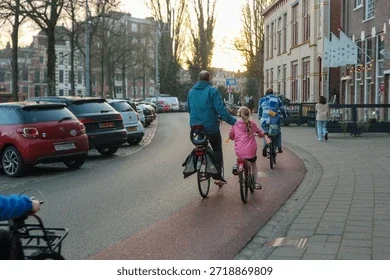
American family successfully integrating while raising children in the Netherlands.
For many Americans considering a move abroad, one question matters more than almost any other:
"Will my children be happy here?"
After nearly twenty years in the Netherlands—as a student, academic, entrepreneur, husband, father, homeowner, and eventually a Dutch citizen—I can say that this question sits at the center of almost every family conversation I have through Dutch Landing.
Parents worry about schools.
They worry about language.
They worry about friendships.
They worry about whether their children will adapt to a completely new country.
The good news is that the Netherlands has a remarkable reputation when it comes to children's well-being. Dutch children consistently rank among the happiest in the world, thanks to a combination of strong family relationships, safe communities, excellent schools, and a culture that values balance between work, school, and family life.
Yet there is one factor that I have seen repeatedly influence whether families truly thrive here:
Integration.
The families who actively engage with Dutch society often experience the strongest outcomes—not only for themselves, but especially for their children.
Children Adapt Faster Than Adults
One of the great advantages children possess is flexibility.
Adults arrive carrying decades of habits, expectations, and cultural assumptions.
Children often arrive with curiosity.
They enter classrooms.
They join sports clubs.
They meet neighbors.
They learn new routines.
Many children begin navigating Dutch life far more quickly than their parents.
This adaptability creates opportunities that adults sometimes underestimate.
Children can become bridges between cultures, helping entire families become more comfortable in their new environment.
Living in the Netherlands vs Building a Dutch Life
Many newcomers naturally seek out English-speaking communities.
There is absolutely nothing wrong with maintaining American traditions or making friends with fellow expats.
The challenge arises when families remain entirely within expatriate circles.
Children who spend all of their time in international environments may miss opportunities to:
Learn Dutch naturally
Build local friendships
Participate in Dutch traditions
Understand Dutch social norms
Feel fully connected to their new home
The goal is not to stop being American.
The goal is to become comfortable in both worlds.
The most successful families often develop a blended identity that embraces the best of both cultures.
The Role of Dutch Schools
Schools are often where integration begins.
The Dutch education system places a strong emphasis on independence, collaboration, and personal responsibility.
For many American parents, aspects of Dutch education initially feel unfamiliar.
Children may be granted greater independence.
Communication can be more direct.
Classroom culture may feel less hierarchical.
Yet these same characteristics often help children develop confidence and resilience.
Schools are not merely educational institutions.
They are communities.
Friendships, cultural understanding, and social confidence often develop alongside academics.
For official information about Dutch education, parents can review:
Families may also benefit from reading our Dutch Landing guide to understanding the Dutch school system before deciding between educational options.
International Schools vs Dutch Schools
One of the most common questions American families ask is whether they should choose an international school or a Dutch school.
The answer depends entirely on a family's goals.
If a family expects to remain in the Netherlands for only a short period, an international school may provide continuity and ease of transition.
However, families planning a long-term future in the Netherlands often find that Dutch schools offer greater integration opportunities.
Children attending Dutch schools are immersed in the language, culture, and social environment of the country.
Over time, this often helps them build stronger local connections and develop a deeper sense of belonging.
Why Local Friendships Matter
Friendships are one of the strongest indicators of successful integration.
When children develop friendships with Dutch classmates and neighbors, they gain access to experiences that cannot be learned from books or websites.
They attend birthday parties.
They visit Dutch homes.
They learn traditions.
They hear Dutch spoken naturally.
They become comfortable in the society around them.
Friendships transform a place of residence into a community.
Sports Clubs and Community Life
Dutch sports clubs play a significant role in social integration.
Whether it is football, hockey, tennis, swimming, gymnastics, or another activity, clubs provide children with opportunities to meet peers outside school.
Many lifelong friendships begin through sports.
Participation also helps families develop local social networks.
Parents meet other parents.
Children gain confidence.
Entire families become more connected to their community.
This is one reason why Dutch Landing encourages families to become involved in local activities as early as possible.
Learning Dutch: More Than Language
Many American parents ask whether their children really need Dutch.
Technically, it is possible to function in English in many parts of the Netherlands.
But language is about much more than communication.
Language is culture.
Language is connection.
Language is belonging.
Children who learn Dutch gain access to friendships, educational opportunities, community activities, and cultural experiences that may otherwise remain out of reach.
The earlier children begin learning Dutch, the easier the process typically becomes.
Experience Dutch Traditions Together
One of the easiest ways to integrate is through shared cultural experiences.
King's Day is an excellent example.
Neighborhood celebrations, flea markets, music, and community events create opportunities for children to experience Dutch culture firsthand.
If your family is unfamiliar with this uniquely Dutch tradition, our Dutch Landing guide to King's Day provides a detailed introduction.
Even something as simple as learning to cycle in all weather conditions can become part of the integration journey.
As discussed in our article about adapting to Dutch weather, one of the first lessons many newcomers learn is that Dutch life rarely stops because of rain.
A Personal Observation
When my own family began building a life in the Netherlands, one thing became clear very quickly:
Children notice everything.
They notice whether parents are excited about learning Dutch.
They notice whether parents engage with neighbors.
They notice whether parents approach Dutch culture with curiosity or hesitation.
In my experience, children often mirror the attitudes of the adults around them.
Families who treat integration as an opportunity frequently see their children develop confidence and adaptability that serves them throughout their lives.
The Dutch Landing Difference
This is where Dutch Landing differs from many relocation companies.
Paperwork matters.
Visas matter.
Housing matters.
But paperwork alone does not build a life.
Many relocation services focus on helping families arrive.
Dutch Landing focuses on helping families thrive.
Founder Dr. Erik Olsen has spent nearly twenty years building a life in the Netherlands. The advice we provide is not theoretical.
It comes from lived experience.
We understand that successful relocation is measured not by receiving a residence permit, but by building meaningful connections, friendships, and opportunities that make the Netherlands feel like home.
Other organizations help Americans move to the Netherlands.
Dutch Landing helps create Future Dutchies.
Frequently Asked Questions
Are Dutch children really among the happiest in the world?
Multiple international studies have consistently ranked Dutch children among the happiest globally due to strong family support, independence, and quality of life.
Do my children need to learn Dutch?
While English is widely spoken, learning Dutch significantly improves integration and long-term opportunities.
Should my child attend a Dutch school or an international school?
The best choice depends on your family's goals and expected length of stay. Long-term residents often find Dutch schools provide greater integration opportunities.
What is the best way to help children integrate?
Encourage participation in local schools, sports clubs, community activities, and cultural traditions while learning some Dutch as a family.
How long does it take children to adapt?
Every child is different, but children often adapt faster than adults because they are immersed in school and social environments.
Conclusion
The Netherlands offers tremendous opportunities for families.
Its schools, communities, and culture provide an environment where children can flourish.
But successful integration does not happen automatically.
Families who engage with Dutch society from Day One often experience stronger friendships, greater confidence, and deeper connections to their new home.
Because the goal is not simply moving to the Netherlands.
The goal is building a future here.
And for children, that future begins with integration.
Ready to Build a Dutch Life?
Dutch Landing helps Americans navigate not only the logistics of relocation but also the realities of building a successful life in the Netherlands.
For official information about relocating to the Netherlands, visit:
Netherlands Worldwide – Moving to the Netherlands
To learn more about how Dutch Landing can help your family build a successful future in the Netherlands, visit:
Your Move, Made Easy.
Dutch Culture vs American Culture: What Americans Should Know Before Moving to the Netherlands
By Dutch Landing
If you're an American considering a move to the Netherlands, you've probably already researched visas, housing, healthcare, and taxes. But there's another topic that deserves just as much attention: culture.
After all, moving abroad isn't just about changing your address—it's about adapting to a different way of life.
The good news is that Americans and Dutch people have more in common than they often realize. Both cultures value independence, entrepreneurship, practicality, and personal responsibility. Yet there are also important differences that can surprise even the most prepared expat.
At Dutch Landing, we've found that the Americans who thrive in the Netherlands aren't necessarily the ones with the highest salaries or the biggest relocation budgets. They're the ones who understand Dutch culture and actively engage with it.
In this guide, we'll explore the biggest similarities and differences between Dutch and American culture, explain how they affect daily life, and provide resources to help you build a successful life in the Netherlands.
Similarity #1: Entrepreneurship Is Respected
One reason the Netherlands is particularly attractive to Americans is its positive attitude toward entrepreneurship.
The Dutch-American Friendship Treaty (DAFT) provides a unique pathway for American entrepreneurs and freelancers to establish themselves in the Netherlands. Official information about DAFT can be found through the Dutch Immigration and Naturalisation Service (IND):
https://ind.nl/en/residence-permits/work/residence-permit-self-employed-person
Like Americans, Dutch people generally admire initiative, self-reliance, innovation, and practical problem-solving.
This cultural overlap is one reason many American entrepreneurs feel comfortable building businesses in the Netherlands.
If you're considering relocating under DAFT, you may also find these Dutch Landing resources useful:
https://www.dutchlanding.nl/zzpbv-calculator
https://www.dutchlanding.nl/affordability-calculator
Similarity #2: Direct Communication
Many Americans have heard that Dutch people are direct.
The rumors are true.
However, the difference is often one of degree rather than kind.
Americans generally value honesty and openness, but often soften criticism with polite language.
Dutch people tend to communicate more directly.
An American manager might say:
"That's an interesting idea. Maybe we should look at a few alternatives."
A Dutch manager might simply say:
"I don't think that's the best solution."
Neither statement is intended to be rude.
The Dutch simply place a higher value on efficiency and clarity in communication.
Learning not to interpret direct feedback as personal criticism is one of the most important cultural adjustments Americans make.
Similarity #3: Practical Thinking
Both Americans and Dutch people tend to be practical problem-solvers.
The Dutch phrase:
"Doe maar normaal."
Literally means:
"Just act normal."
The phrase reflects a broader cultural preference for practicality, humility, and common sense.
Many Americans find this refreshing after arriving in the Netherlands.
Results often matter more than appearances.
Competence often matters more than status.
And solutions matter more than grand speeches.
Difference #1: Work-Life Balance
Perhaps the most noticeable cultural difference is work-life balance.
The Dutch government business portal explains that work-life balance is an important aspect of Dutch culture and working life:
In the United States, long hours are frequently viewed as a sign of commitment and ambition.
In the Netherlands, working excessive hours may prompt colleagues to ask:
"Why weren't you able to finish during regular working hours?"
Part-time work is common, even among professionals.
Parents frequently adjust schedules around family responsibilities.
Vacation time is expected to be used.
Many Americans discover that the Dutch approach leads to lower stress levels and improved quality of life.
Difference #2: Status Matters Less
American culture often places considerable emphasis on titles, achievements, and professional status.
Dutch culture is generally more egalitarian.
In Dutch workplaces, it is perfectly normal for employees to question management decisions, offer alternatives, or openly disagree during meetings.
Titles carry less social weight.
Good ideas matter more than organizational hierarchy.
This can initially feel surprising to Americans accustomed to more structured workplace environments.
Difference #3: Consensus Matters
Americans often admire decisive leadership.
The Dutch often admire consensus-building.
This concept is deeply rooted in Dutch history.
For centuries, Dutch communities had to cooperate to manage water, dikes, and flood protection.
The result was a culture that values consultation and compromise.
This tradition is sometimes referred to as the "Polder Model."
For Americans, meetings can sometimes feel longer because Dutch organizations often seek input from multiple stakeholders before making decisions.
On the positive side, once a decision has been reached, implementation is often smoother because everyone has already been consulted.
Dutch Bureaucracy: Different, Not Worse
One of the biggest surprises for American expats is how interconnected Dutch administrative systems are.
In the United States, many systems operate independently.
In the Netherlands, nearly everything connects.
For example:
✔ Municipal Registration
✔ BSN Number
✔ DigiD
✔ Health Insurance
✔ Tax Administration
✔ Banking Services
Many of these systems depend upon one another.
Official information about municipal registration can be found here:
Information about the BSN (Citizen Service Number) can be found here:
https://www.government.nl/topics/personal-data/citizen-service-number-bsn
For Americans, this can initially feel bureaucratic.
For the Dutch, it simply feels organized.
Understanding the logic behind the system makes it much easier to navigate.
DigiD: Your Digital Key to Dutch Life
Almost every American expat eventually discovers the importance of DigiD.
Official information is available here:
DigiD allows residents to securely identify themselves online when interacting with government agencies, healthcare providers, educational institutions, and many other services.
Need to access government correspondence?
DigiD.
Need to communicate with healthcare providers?
DigiD.
Need to manage certain tax matters?
DigiD.
Think of DigiD as the digital key that unlocks Dutch society.
Healthcare: A Different Philosophy
Healthcare is another area where Americans notice major differences.
The Dutch healthcare system is built around universal access and mandatory basic health insurance.
Official information is available through the Dutch Government:
https://www.government.nl/topics/health-insurance
Every resident is generally required to obtain basic health insurance.
Unlike many American plans, the core coverage is standardized by law.
One of the biggest adjustments for Americans is the role of the huisarts (general practitioner).
Your huisarts is typically your first point of contact for medical concerns.
Need a specialist?
See your huisarts first.
Need a prescription?
Usually your huisarts first.
Need medical advice?
You guessed it—your huisarts first.
Many Americans are skeptical at first.
Yet over time, many come to appreciate the simplicity, predictability, and relatively low out-of-pocket costs compared to what they experienced in the United States.
Taxes and Financial Planning
Taxes are another area where understanding Dutch systems pays off.
Official information from the Dutch Tax Authority can be found here:
https://www.belastingdienst.nl/wps/wcm/connect/en/home/home
Americans moving under DAFT often face important questions regarding business structure.
Should you operate as a ZZP (sole proprietor)?
Or establish a BV (private limited company)?
The answer can significantly affect taxes, liability, administration, and long-term financial planning.
That's why Dutch Landing created:
https://www.dutchlanding.nl/zzpbv-calculator
And because budgeting is equally important:
https://www.dutchlanding.nl/affordability-calculator
The Secret to Successful Integration
After nearly twenty years living in the Netherlands, Dutch Landing founder Dr. Erik Olsen has observed one consistent pattern:
The Americans who are happiest in the Netherlands are usually those who embrace Dutch life rather than trying to recreate America overseas.
That doesn't mean abandoning your identity.
It means learning how Dutch systems work.
Ride a bike.
Celebrate King's Day.
Learn how healthcare works.
Understand Dutch communication styles.
Participate in your community.
Appreciate work-life balance.
The more you engage with Dutch culture, the easier life becomes.
Why Dutch Landing Is Different
Many relocation services focus primarily on paperwork.
And paperwork is important.
But paperwork alone doesn't create a successful relocation.
Dutch Landing was founded by an American who has spent nearly two decades navigating Dutch society as a student, academic, entrepreneur, professional, homeowner, husband, and parent.
That experience allows us to help clients with more than forms and applications.
We help Americans understand:
Dutch bureaucracy
Housing realities
Healthcare systems
Education options
Tax planning
Cultural integration
Long-term residency planning
Because successful relocation isn't just about arriving.
It's about building a life.
Final Thoughts
The Netherlands and the United States share many values.
Both cultures admire independence, entrepreneurship, and practical thinking.
But they express those values differently.
Understanding those differences can dramatically reduce culture shock, avoid common frustrations, and help you integrate more successfully.
The paperwork gets you into the Netherlands.
Understanding Dutch culture helps you thrive once you're here.
If you're planning your move, Dutch Landing is here to help.
Learn more at:
Contact us:

From Deductibles to the Huisarts: A Complete Guide to Dutch Healthcare for American Expats Published by Dutch Landing
Relocation Guides for Americans Moving to the Netherlands
Making the move from the United States to the Netherlands brings dozens of adjustments — but few are as immediately practical, or as financially significant, as switching healthcare systems. Americans arrive carrying deep-seated habits from the US system: choosing in-network specialists, worrying about surprise billing, and navigating insurance card bureaucracy at every clinic visit. The Dutch system operates on fundamentally different principles, and the sooner you understand them, the smoother your transition will be.
This guide breaks down the key differences between the two systems and walks you through exactly what you need to do upon arrival.
The Core Philosophy: Universal Mandate vs. Market Choice
The United States operates on a predominantly market-driven model, where coverage is largely tied to employment, age (Medicare), or income (Medicaid). Tens of millions of Americans remain uninsured or underinsured, and out-of-pocket costs — from emergency room visits to prescription drugs — can be financially ruinous. The US spent roughly $12,500 per person on healthcare in 2022, the highest of any developed nation, yet outcomes in areas like life expectancy and chronic disease management consistently lag behind peer countries.
The Netherlands takes a different approach. Under the Health Insurance Act (Zorgverzekeringswet), every resident of the Netherlands is legally required to purchase basic health insurance. This is not a government-run single-payer system — it is a tightly regulated private market. You choose your insurer from a competitive field of providers, but the government mandates what the basic package (basispakket) must cover. The result is near-universal coverage: 99.9% of the Dutch population has access to a wide range of services, underpinned by an emphasis on primary care.
The Netherlands spent approximately $7,179 per person on healthcare in 2021 — roughly half the US figure — with 85% funded by public sources. The World Index of Healthcare Innovation ranked the Dutch system 4th best in the world in 2024, behind Switzerland, Ireland, and Germany.
What You Pay: Premiums, Deductibles, and Allowances
For Americans accustomed to employer-subsidised premiums and multi-thousand-dollar deductibles, Dutch healthcare costs feel remarkably contained — once you understand the structure.
Monthly premium (zorgpremie): Basic insurance premiums run approximately €155–€165 per month in 2026, with an average of €159.63/month according to Zorgwijzer. You pay this directly to your insurer.
Annual deductible (eigen risico): The mandatory deductible is €385 per year in 2026 — unchanged from 2025. Crucially, GP visits do not count toward this deductible — you will never receive a bill for seeing your family doctor. The eigen risico applies mainly to hospital treatments, specialist care, and certain medications.
Income-based healthcare allowance (zorgtoeslag): Lower-to-middle income earners can receive a government subsidy toward their premium. In 2026, singles earning below approximately €40,857 annually and couples with combined income below €51,142 may qualify — up to €129/month for singles and €246/month for couples. Applications are made via toeslagen.nl using your DigiD, and payments are made directly to your bank account monthly.
Compare this to the US, where average employer-sponsored family premiums exceeded $23,000 in 2023, with deductibles often ranging from $1,500 to $7,000 before insurance meaningfully kicks in. The Dutch ceiling is real and predictable. Many Americans report saving approximately €4,000 per person per year compared to what they paid with US employer insurance.
The GP as Gatekeeper: A Fundamental Mindset Shift
This is the single biggest adjustment Americans face. In the US, it is common to self-refer directly to a dermatologist, cardiologist, or orthopaedic specialist. In the Netherlands, you cannot do this outside of an emergency.
The General Practitioner (huisarts) is your first and primary point of contact for virtually all medical issues. Your GP manages your overall care, handles the majority of common conditions directly, and — when genuinely needed — refers you onward to a specialist or hospital. Dutch GPs undergo a six-year medical education plus three years of specialist training, and are required to re-register and update their skills every five years. They are not simply a toll-booth to specialists; they are highly competent generalists who resolve the vast majority of health concerns independently.
This gatekeeper model can feel frustrating at first, particularly for Americans used to direct-access care. In practice, however, GP appointments are typically available within days, phone consultations are common, and the system prevents the expensive and often unnecessary specialist visits that drive up costs elsewhere. Emergency care at a hospital (Spoedeisende Hulp) remains accessible without referral at any time.
One important cultural note: Dutch GPs are considerably more conservative about prescribing medication than their American counterparts, especially antibiotics. Expect watchful waiting, lifestyle advice, and reassurance to be the first line of response for many conditions — a reflection of evidence-based practice, not indifference.
What the Basic Package Covers
The government-defined basispakket is reviewed annually by the National Health Care Institute (Zorginstituut Nederland)and covers a comprehensive range of services. Under the Zorgverzekeringswet, all insurers must accept every applicant regardless of age or health status — pre-existing conditions cannot be used to deny or price basic coverage.
Standard coverage includes:
GP visits (no cost at point of care, never counting toward the deductible)
Hospital treatment and surgery
Prescription medications
Mental health care (GGZ) via GP referral — mental health treatment is covered under the basic package, though specialist wait times can be lengthy
Maternity care including midwife-led birth (a Dutch hallmark)
Emergency care abroad, up to the Dutch reimbursement rate
What is not covered by the basic package:
Dental care for adults — only emergency dental treatment is included. Adults need supplementary insurance (aanvullende verzekering) for routine dental visits. This catches many newcomers off guard. Note: dental care for children under 18 is free.
Physiotherapy (beyond a limited number of sessions for chronic conditions)
Glasses and contact lenses for adults
Cosmetic treatments
Supplementary insurance is available from all major insurers to fill these gaps and is worth evaluating carefully during your first enrollment period.
Your Step-by-Step Checklist as a New Arrival
1. Register Your Address and Get Your BSN
Before you can enroll in Dutch health insurance, you need a Burgerservicenummer (BSN) — the Dutch citizen service number — obtained when you register at your local gemeente (municipal office). This is your foundation for everything: insurance, tax, banking, and the zorgtoeslag allowance.
2. Enroll in Health Insurance Within Four Months
You must enroll with a Dutch insurer within four months of becoming a Dutch resident to avoid fines. Coverage is backdated to your registration date, so you will not have a gap. The four major insurers — Achmea, VGZ, CZ, and Menzis — collectively cover 84.8% of insured residents in the Netherlands. For expats who prefer fully English-language service, Glider (formerly Loonzorg) and ONVZ are well-regarded options. Use Zorgwijzer.nl or Independer.nl to compare plans.
Note: The restitutiepolis — a flexible policy type that offered full reimbursement at any provider — was discontinued at the start of 2025. Most former holders were automatically moved to a combinatiepolis. If you are comparing plans, you will no longer see this option.
3. Apply for Zorgtoeslag if Eligible
Visit toeslagen.nl and apply for the healthcare allowance using your DigiD. Do this as soon as you have your BSN and insurance — allowances are not backdated automatically.
4. Register with a Local GP (Huisarts)
This step is separate from your insurance enrollment, but equally essential. Your GP is your primary entry point to the entire Dutch healthcare system. Most practices require you to live within their catchment area (roughly a 15-minute radius), so find a practice near your home. Use ZorgkaartNederland to search for GPs by address, read verified patient reviews, and filter for English-speaking practitioners — many GPs in Amsterdam, Rotterdam, The Hague, and Utrecht speak fluent English and actively serve international patients. In major cities, practices can fill up quickly, so begin this process early.
5. Register with a Local Pharmacy
Register with a local pharmacy (apotheek) when you first arrive. Your GP sends prescriptions directly to your registered pharmacy; you collect them without visiting the doctor again. This streamlined system is one of the small daily conveniences you will quickly appreciate.
The Annual Healthcare Season
Unlike the US open enrollment period, the Dutch system runs on a transparent annual cycle. Each November, insurers announce their premiums and policy updates for the following year. If you want to switch insurers, you must do so before December 31; your new insurer will cancel the old policy on your behalf. Mark this window in your calendar every year — premiums typically increase, and it is worth comparing options.
The Bottom Line for Americans
The Dutch healthcare system will require a genuine adjustment in habits and expectations. You will need a referral to see specialists. Your GP may tell you to wait and see rather than prescribe immediately. Dental care will require an add-on policy. And if you move to a new neighbourhood, you may need to re-register with a new practice.
What you gain in return is substantial: predictable costs, universal coverage regardless of your employment status or health history, and access to a system consistently rated among the world's best. For Americans who have spent years navigating networks, surprise bills, and coverage gaps, the clarity of the Dutch model often comes as a profound relief.
Key Official Resources
ResourceLinkDutch Government Health Insurance Overviewgovernment.nl/topics/health-insuranceNational Health Care Instituteenglish.zorginstituutnederland.nlHealthcare Allowance (Zorgtoeslag)toeslagen.nlFind a GP or Specialistzorgkaartnederland.nlCompare Insurance Planszorgwijzer.nlDutch Healthcare Authority (NZa)nza.nl
Need help navigating your first weeks in the Netherlands? Dutch Landing's Relocation Package guides you through registration, BSN, insurance, and everything in between — so you spend less time on paperwork and more time settling in.
© Dutch Landing | dutchlanding.nl | Written for informational purposes. Figures reflect 2025 rates and are subject to annual revision.
The Need for Expert Advice When Relocating to the Netherlands
Moving to the Netherlands is exciting. The infrastructure is excellent, the country is safe, English is widely spoken, and the quality of life is genuinely high. For Americans making the move, it can feel familiar enough that you don't anticipate many surprises. And that familiarity, in many ways, is exactly the problem.
The Netherlands is not the United States — but it's also not radically foreign. It runs on systems and logic you can broadly recognize: taxes, healthcare, banking, government registration, social benefits. The machinery looks similar from the outside. The trouble comes when you start trying to operate it, and you discover that the controls are just different enough to cause real confusion — and real consequences when things go wrong.
This is why expat advice, when it comes to relocating to the Netherlands, isn't a luxury. For most people making the move, it's one of the most valuable investments they can make.
The Dutch System: Familiar in Shape, Different in Practice
If you arrive in the Netherlands expecting things to work more or less like they do back home, you're in good company. Most newly arrived Americans do. The country is organized, bureaucratically competent, and largely English-friendly. What catches people off guard isn't the language or the culture — it's the sequence.
Almost everything here depends on everything else, and getting the order wrong has consequences.
Take the foundational step: registering with your local municipality (gemeente) and obtaining your BSN(Burgerservicenummer — the Dutch equivalent of a Social Security Number). The BSN is required for virtually every official transaction in the Netherlands: opening a bank account, enrolling in health insurance, filing taxes, receiving your salary, and accessing government services. Without it, most other processes simply stall.
Once you have your BSN, you apply for a DigiD — your digital identity for interacting with Dutch government systems. Filing taxes, accessing your healthcare records, using the Mijn Overheid portal — all of it runs through DigiD. The activation code arrives by post, so the advice is always to apply early, long before you actually need it. That last detail — apply before you need it — is exactly the kind of thing you don't know to know when you first arrive.
Healthcare: Same Word, Different World
In the United States, healthcare is tied to your employer. You accept the plan, you pay your premiums, and within that plan you generally have direct access to specialists. You want to see a cardiologist or a dermatologist? You find one in your network and you make an appointment.
In the Netherlands, the two systems are structurally opposite. Health insurance here is mandatory for every resident — not optional, not employer-dependent — and you purchase it independently from a Dutch insurer. The government sets the rules; you choose the provider. That shift alone takes some adjustment.
But the bigger adjustment is the role of the huisarts — your general practitioner. In the Dutch system, the GP is a gatekeeper: you cannot see a specialist without a referral. For Americans accustomed to booking directly with specialists, this feels restrictive at first. For many, it becomes one of the most common sources of genuine frustration in early expat life.
There's also a compulsory annual deductible — the eigen risico — which works differently from US co-pays and deductibles in ways that catch people off guard. And there are allowances (zorgtoeslag) available to help offset insurance costs, which eligible residents can claim — but only if they know to apply for them.
You must register for Dutch health insurance within four months of becoming a resident. Miss that deadline, and you face fines from the CAK and backdated premiums. The Rijksoverheid — the Dutch central government — publishes clear official guidance on healthcare insurance requirements, and it's the right place to go for authoritative answers. Though, as with much of the Dutch system, knowing which questions to bring to it is half the challenge.
The 30% Ruling: A Benefit That Requires Perfect Timing
One of the most significant financial opportunities available to qualifying expats in the Netherlands is the 30% ruling — a tax facility that allows eligible foreign employees to receive up to 30% of their gross salary tax-free. For high earners, this can represent thousands of euros in annual savings, and it is one of the primary reasons skilled international workers are attracted to the Netherlands.
But the 30% ruling is also one of the clearest examples of why you need expert guidance before you arrive — not after.
The application must be submitted to the Belastingdienst — the Dutch Tax Authority — within four months of your start date. Submit it in time, and the benefit is backdated to your first day of work. Submit it late, and you lose the retroactive benefit permanently; it begins only from the month after the decision. And if you move to the Netherlands before being recruited — if you've already registered with the municipality before signing your employment contract — you may not qualify at all, because the ruling requires that you were recruited from abroad.
These are not edge cases. They happen regularly to people who didn't know the question to ask. The information exists on business.gov.nl, the official Dutch government portal for employers and employees, but unless you know to look for it — and when — you can miss a benefit worth tens of thousands of euros over a five-year period. For something this consequential, working with a qualified tax advisor before you land isn't optional. It's essential.
The Limits of Online Information
The internet is full of expat content about moving to the Netherlands. Facebook groups, Reddit threads, personal blogs, YouTube vlogs — there is a wealth of genuine, well-intentioned information from people who have made the move themselves. Dutch Landing is part of that ecosystem, and we value it.
But there is an inherent limitation to this kind of peer-sourced advice: it reflects individual experiences, not universal rules.
The person who describes how they handled their BSN registration did it in Amsterdam in 2022, working for a specific employer, arriving with a specific visa status, from a specific country. Their story is real. Their solution worked for them. But their situation may not be yours — and in Dutch bureaucracy, the details matter enormously. Different municipalities have different procedures. Your employment situation affects your tax obligations. Whether you're employed or self-employed changes your options dramatically. Family composition affects your benefit eligibility.
What expat communities do brilliantly is provide emotional support, practical orientation, and a sense of what life here actually feels like. What they can't reliably provide is advice calibrated to your specific circumstances. And when the stakes involve tax benefits, visa eligibility, or legal compliance, calibration matters.
There's also a time dimension. The Dutch system changes. The 30% ruling, for example, was updated significantly in 2024, reducing the tax-free percentage from a flat 30% to a scaled structure for new arrivals. Someone who wrote a detailed guide to the ruling in 2023 may be sharing information that is now outdated — not because they were wrong, but because the rules moved. Official sources like the Belastingdienst and Rijksoverheid are always the authoritative reference, but interpreting and applying them to a personal situation is exactly where expert guidance earns its value.
The pattern many expats describe looks something like this: you arrive, you piece things together from online sources, you ask questions in expat groups, and eventually — sometimes months in — you realize there was a step you missed, a deadline you didn't know about, or a benefit you didn't claim. Then you work backward, trying to fix it. Sometimes you can. Sometimes you can't.
The better path is to understand the landscape before you land — to know not just what the system looks like, but how it applies to you.
The Questions You Don't Know to Ask
This is the real challenge of relocating to the Netherlands from the United States. It's not that the information isn't available — much of it is. It's that you don't yet know what you don't know.
You know to ask: How do I get health insurance? You may not think to ask: Am I eligible for zorgtoeslag, and when do I need to apply?
You know to ask: What is a BSN? You may not think to ask: What happens to my 30% ruling eligibility if I register before signing my contract?
You know to ask: How do I file taxes? You may not think to ask: Does my partner also qualify for any tax benefits, and how does our financial situation look when we file jointly?
Expert advice — from a qualified relocation consultant, tax advisor, or expat legal specialist — doesn't just answer the questions you bring. It surfaces the ones you haven't thought of yet. And in a system where timing, sequence, and individual circumstance all carry real financial and legal weight, that's where the value lives.
Start With Clarity
Dutch Landing exists to help Americans navigate life in the Netherlands with more confidence and fewer costly surprises. If you're planning a move — or you've recently arrived and feel like you're piecing things together one discovery at a time — we'd love to talk.
Get in touch via our contact page and let us know where you are in your relocation journey. Whether you have a specific question or you're looking for help building a clearer picture of what to expect, we're here to help you land well — and make the most of life in the Netherlands from day one.
Already navigated something that caught you off guard? Share it in the comments below. Your experience might be exactly what another reader needs to hear.
How to Budget for Your Move to the Netherlands: A Complete Guide for Americans (2026)
Moving to the Netherlands from the USA is one of the most exciting decisions you can make — and one of the most financially complex. The Dutch system is generous in ways Americans rarely expect, and expensive in ways that catch even the best-prepared newcomers off guard. Whether you're arriving as a single professional, a couple, or a family with children, building an accurate budget before you land is one of the most important things you can do.
This guide breaks down the real monthly costs of living in the Netherlands by household type, with honest comparisons to what you're used to paying in the US.
Want to skip straight to the numbers? Use the Dutch Landing Affordability Calculator to get a personalised cost estimate based on your household size, target city, and income.
Why American Budgeting Assumptions Don't Travel Well
The Netherlands operates on fundamentally different financial logic than the US. Before diving into the numbers, three structural differences shape everything.
Healthcare costs a fraction of what you pay at home.Dutch basic health insurance (basisverzekering) runs around €159 per month in 2026 — for comprehensive coverage. No surprise billing, no network anxiety, no five-figure deductibles. For most Americans, this alone represents thousands of euros in annual savings.
The government actively subsidises your cost of living. The Dutch toeslagen system — a series of income-tested allowances administered by the Belastingdienst — can significantly reduce your effective housing, healthcare, and childcare costs. Many Americans qualify and never claim them. More on this below.
Housing is the real shock. The Dutch rental market is in genuine crisis. A shortage of approximately 410,000 homes means competition is fierce, landlords hold most of the leverage, and arriving without a local employment history puts you at an immediate disadvantage. Budget conservatively here — and start your search earlier than you think you need to.
One-Time Arrival Costs: What Every American Needs to Budget
Regardless of household size, your first three months in the Netherlands will be significantly more expensive than every month that follows. These are the costs Americans most consistently underestimate.
Rental deposit (typically two months' rent): €3,000 – €6,000
First month's rent upfront: €1,500 – €2,500
Household setup (most Dutch rentals are unfurnished — no appliances, sometimes no light fixtures): €2,000 – €5,000
DAFT visa IND application fee: €423 per main applicant
KvK business registration: €75
Short-term furnished housing while you search (typically 30–50% more expensive than long-term): Variable
Our recommendation: arrive with a minimum buffer of €8,000–€15,000 set aside for first costs alone, separate from your ongoing monthly budget. This is money you will not recover quickly.
Budgeting as a Single American
A single American arriving in the Netherlands — typically on a DAFT visa as a freelancer or sole proprietor — can expect to spend between €2,200 and €2,800 per month for a comfortable life in Amsterdam. In Utrecht, The Hague, or Rotterdam, that figure drops to €1,900–€2,400.
Sample monthly budget — single professional in Amsterdam:
• Rent (1-bed, unfurnished): €1,500 – €2,200
• Health insurance (basisverzekering): €159
• Groceries: €250 – €350
• Public transport (OV-chipkaart): €80 – €130
• Utilities (gas, electricity, internet): €150 – €220
• Phone: €20 – €40
• Dining out and social: €200 – €350
• Estimated monthly total: €2,359 – €3,490
How does this compare to the US? A comparable lifestyle in a mid-tier American city — Chicago, Denver, or Seattle — would run $3,500–$5,000 per month once you factor in health insurance premiums, deductibles, and car costs. The Netherlands is more expensive on rent, but cheaper on almost everything else.
One benefit singles often miss: If your income falls below €40,857 per year, you may qualify for zorgtoeslag — the healthcare allowance — worth up to €131 per month. For couples, the combined income threshold is €51,142. Apply through Mijn Toeslagen as soon as you have your DigiD.
Budgeting as a Couple
Couples benefit from significant economies of scale in the Netherlands. Shared rent, shared utilities, and the ability for both partners to work — if arriving on a DAFT family permit — means your per-person cost drops considerably.
Under the DAFT visa for families, a spouse or registered partner accompanies the primary applicant on a dependent residence permit. Crucially, that spouse has full and unrestricted work authorisation in the Netherlands — they can take salaried employment, freelance, or start their own business. This makes the two-income household a realistic starting point much faster than many couples expect.
Sample monthly budget — couple in Utrecht:
• Rent (2-bed, unfurnished): €1,800 – €2,400
• Health insurance (x2): €318
• Groceries: €400 – €550
• Public transport (x2): €160 – €260
• Utilities: €180 – €260
• Phones (x2): €40 – €80
• Dining out and social: €300 – €500
• Estimated monthly total: €3,198 – €4,368
How does this compare to the US? A comparable couple's lifestyle in a major American metro — factoring in two health insurance premiums, a car payment, and typical housing costs — would run $6,000–$9,000 per month. The Dutch version is meaningfully cheaper in total, even if rent feels high in isolation.
Budget tip for couples: If only one partner is working initially while the other gets established, check your eligibility for huurtoeslag (rent allowance). A significant 2026 change removed the maximum rent ceiling, meaning more couples now qualify than before. Check your eligibility with the Belastingdienst trial calculation tool.
Budgeting for Families with Children
For American families with children, the Netherlands is both more expensive and more financially supported than almost anywhere in the US. The costs are real — but so is the government safety net.
Sample monthly budget — family of four (2 adults, 2 children) in The Hague:
• Rent (3-bed, unfurnished): €2,200 – €3,200
• Health insurance (adults x2; children are covered at no extra premium): €318
• Groceries: €600 – €800
• Public transport: €200 – €350
• Utilities: €220 – €320
• Childcare or school costs: €100 – €800 (see below)
• Activities, clothing, personal expenses: €400 – €600
• Estimated monthly total: €4,038 – €6,388
Childcare costs vary enormously depending on your income and subsidy eligibility — which is where the Netherlands genuinely surprises American families.
The Dutch Government Benefits That Change the Family Calculation
This is the part of the Dutch financial system most Americans don't discover until someone tells them. These benefits are real, accessible to expat families, and can transform your monthly budget.
Kinderbijslag (child benefit): Every family with children in the Netherlands receives this universal quarterly payment from the SVB (Social Insurance Bank), regardless of income. The confirmed 2026 amounts per child per quarter are €295.07 (ages 0–5), €358.30 (ages 6–11), and €421.53 (ages 12–17). There is no income test — you simply apply once registered. Apply at svb.nl.
Kinderopvangtoeslag (childcare allowance): If both parents work or study, the Dutch government reimburses between 30% and 96% of registered childcare costs. Families earning under €56,000 combined receive the maximum 96% reimbursement — meaning full-time daycare can cost as little as €63–€74 per month per child after subsidy. Apply through Mijn Toeslagen via your DigiD. The official 2026 childcare allowance amounts are published by the Dutch government.
Kindgebonden budget: An additional income-tested monthly supplement on top of kinderbijslag, worth approximately €200 per month for an average qualifying family. The lower your household income, the higher the payment. Check your eligibility at belastingdienst.nl.
Children's health insurance: Children are covered under the Dutch public system at no additional premium. This alone saves American families hundreds of dollars per month compared to US family health plans.
Dutch State Schools vs. International Schools: The Biggest Budget Variable
For families, this is often the single largest financial decision you'll make after choosing a city.
Dutch state schools are free, high quality, and excellent for long-term integration — but taught entirely in Dutch. They work best for younger children who can acquire the language naturally, and for families planning to stay for the long term.
International schools teach in English using the IB or American curriculum, making the transition far easier. But they come at a significant cost: typically €10,000–€25,000 per year per child. This cost is not included in the monthly budget estimates above and must be planned for separately. International schools are available in Amsterdam, The Hague, Utrecht, and Eindhoven.
The right choice depends heavily on your children's ages, language ability, and how long you plan to stay. This is one of the first decisions Dutch Landing helps families work through properly.
The Dutch vs. US Cost Comparison: What Actually Changes
Health insurance: US cost $400–$700 per month / NL cost €159 per month → Much cheaper in the Netherlands
Car ownership: US cost $600–$1,200 per month (car, insurance, fuel) / NL cost €0–€100 per month (most expats cycle) → Much cheaper in the Netherlands
Childcare (one child): US cost $1,500–$3,000 per month / NL cost €63–€450 per month after subsidy → Much cheaper in the Netherlands
Groceries (single person): US cost $400–$600 per month / NL cost €250–€350 per month → Cheaper in the Netherlands
Rent (1-bed, major city): US cost $2,000–$3,500 per month / NL cost €1,500–€2,200 per month → Similar or slightly cheaper
Dining out: Broadly similar in both countries
Income tax: US 22–37% federal plus state / NL up to 49.5% (Box 1) → Higher in the Netherlands, but the social benefits it funds offset much of the difference in practice
The Dutch tax rates look alarming to American eyes — but what those taxes buy is a healthcare system, a childcare system, and a social safety net that together dramatically reduce out-of-pocket spending on the things that consume the most American household budgets.
Get Your Personalised Budget
Every household is different. Income level, target city, number of children, whether one or both partners are working, and whether you qualify for the 30% ruling all affect what your Dutch life will actually cost. Generic averages only get you so far.
The Dutch Landing Affordability Calculator is built specifically for Americans considering the move. Enter your household details and get a tailored monthly cost estimate, including Dutch government benefits you may be entitled to claim.
And if you want to talk through your specific situation — business structure, visa route, housing city, or family circumstances — book a free 30-minute discovery call with Erik. With 19 years of living and working in the Netherlands, he's seen every combination of circumstances and can help you build a budget that actually reflects your life.
Useful Links
Dutch Landing Affordability Calculator
Belastingdienst — Dutch Tax Authority
Mijn Toeslagen — Apply for allowances
Zorgtoeslag — Healthcare allowance
Belastingdienst trial calculation tool (proefberekening)
SVB — Child benefit (Kinderbijslag)
Kinderopvangtoeslag — 2026 official amounts (Rijksoverheid)
IND — DAFT visa and residence permits
KvK — Dutch Chamber of Commerce
Government.nl — Dutch health insurance explained
DigiD — Dutch Digital Identity
Legal Notice
The financial figures in this article are estimates based on publicly available data as of May 2026 and are intended for general planning purposes only. Actual costs vary significantly based on individual circumstances, city, lifestyle, and household composition. Benefit eligibility is subject to change. Always verify current rates and your personal eligibility directly with the relevant Dutch government bodies, including the Belastingdienst and the SVB.
Weather in The Netherlands: What Every Expat Needs to Know
Moving to the Netherlands? Then there's one topic you need to master before you even unpack your boxes: the weather. Not just how to dress for it — but how to talk about it. Because in the Netherlands, discussing the weather isn't small talk. It's a national pastime, a social ritual, and occasionally, a form of therapy.
Whether you're freshly landed or a few months into your Dutch adventure, understanding the weather here — and the Dutch relationship with it — will help you feel more at home faster than almost anything else. Let's get into it.
"Lekker Weertje, Hè?" — The Dutch Art of Weather Talk
If you've spent even a week in the Netherlands, you've probably noticed it. Your neighbor catches your eye while you're both wrestling with wet bike saddles in a drizzle, and says with a grin: "Lekker weertje, hè?" — literally, "Nice weather, huh?" It could be sincere. It could be deeply ironic. With the Dutch, the intonation tells you everything.
Weather talk in the Netherlands isn't just filler between real conversation topics — it is the conversation. At the coffee machine at work, at the bus stop, standing in line at the Albert Heijn: the weather will come up. Every time. And once you understand why, it starts to feel less like small talk and more like a genuine form of social bonding.
Part of the reason is simply practical. The Netherlands experiences around 150 rainy days per year, which means the weather is always relevant. When something affects your daily life this consistently — your commute, your cycling route, your weekend plans — of course you talk about it. But the Dutch have elevated this into something more nuanced.
As anyone who has lived here long enough will tell you, weather complaints in the Netherlands aren't really about misery. They're a shared ritual — a way to connect with strangers, acknowledge a common experience, and demonstrate that unmistakably Dutch blend of stoicism and dry humor. There's even a subtle pride buried in it: the Dutch know their weather has a reputation, and leaning into that reputation is a way of saying "we know who we are."
Here are a few expressions worth having in your back pocket:
"Lekker weertje, hè?" — "Nice weather, huh?" (sincere or deeply sarcastic, depending on delivery)
"Wat een hondeweer!" — "What terrible dog's weather!" (for truly awful days)
"Rotweer, hè?" — A simple, blunt: "Rotten weather, isn't it?"
"Achter de wolken schijnt de zon" — "Behind the clouds the sun is shining" (optimism, Dutch-style)
"Weer of geen weer" — "Come rain or shine" (used to describe any activity done regardless of conditions)
You can read more about the quirks of Dutch weather expressions at IamExpat and the Direct Dutch Institute — both excellent resources for building your Dutch cultural literacy.
And when the sun does finally emerge? The transformation is instant. Terraces fill within minutes. Bikes appear from everywhere. Someone will inevitably say "Eindelijk lekker weer" — "Finally nice weather" — with the kind of relief usually reserved for a medical all-clear. The Dutch don't take sunshine for granted. They've earned the right to celebrate it.
The Weather Itself: What You Actually Need to Know
Now let's talk about what the weather actually does here — especially if you're coming from the United States, where your expectations about seasons may need some serious recalibrating.
Spring: The Great Tease
Spring in the Netherlands has a well-earned reputation for being... complicated. March can still bring frost and even snow flurries, and April is only marginally more forgiving. Average maximum temperatures in March hover around 9°C (48°F), with April not rising dramatically higher.
But here's where it gets interesting — and where many expats get caught off guard. On any given day in March or April, the sun can appear, temperatures can climb surprisingly quickly, and suddenly it feels like summer has arrived. People strip off their coats and sit outside at café terraces. It's glorious. It feels like a promise.
And then the next morning, you wake up to grey skies and cold rain again.
This is not unusual. This is Tuesday. The Dutch have a phrase for it: "April doet wat hij wil" — April does what it wants. The volatility of spring weather here is genuine, and it catches newly arrived expats off guard constantly. You can experience all four seasons in a single week. Pack layers. Keep an umbrella on your bike. And never store your rain jacket until at least June.
The flip side is that April and May are among the least rainy months of the year in the Netherlands — the country is at its driest in spring. The tulips bloom from mid-April to mid-May, painting the landscape in the kind of color that makes you understand immediately why the Dutch became great painters. It's worth every erratic weather pattern to see it.
Summer: Cooler Than You Think
Here's the reality check that surprises almost every American who moves to the Netherlands: Dutch summers are mild. Pleasantly so, but mild. If you're moving from the American South, the Midwest, or really anywhere that experiences serious summer heat, Dutch summer will feel more like a long, lovely spring.
Average summer temperatures in the Netherlands typically range between 21°C and 26°C (roughly 70°F to 79°F), with July and August being the warmest months. Compare that to, say, Chicago in August, Atlanta in July, or Phoenix ever — and you'll understand why Dutch people consider 25°C a heat wave.
That said, the Netherlands is not immune to genuine heat. In July 2019, the thermometer hit a record-breaking 39.6°C (103°F) in Maastricht. But these extremes are rare, and for most summers, you're looking at temperatures that hover in the low to mid-20s, often interrupted by cool, rainy periods that can last weeks.
Dutch summers can also be capricious. A few soggy, grey weeks might be followed by a sudden stretch of beautiful sunshine. The key is to stay flexible and check the KNMI (Koninklijk Nederlands Meteorologisch Instituut — the Royal Netherlands Meteorological Institute) regularly. The KNMI is the official Dutch national weather service and the gold standard for weather forecasting in the country. Their website and app are indispensable tools for expat life.
For American expats used to reliable summer sunshine and beach weather, this can be an adjustment. Summers here require the same layered approach as the rest of the year: have a light jacket within reach, keep your rain gear close, and never plan an outdoor event without a backup option. On the other hand, Dutch summer evenings are genuinely magical — long, golden, and warm enough to eat dinner outside well past 9 PM.
The Bigger Picture: An Oceanic Climate
All of this — the unpredictability, the mild summers, the perpetual dampness — stems from the Netherlands' temperate maritime climate, shaped by its proximity to the North Sea and the Atlantic. There are no real temperature extremes here. Winters are cold but not brutal. Summers are warm but rarely scorching. The trade-off is that it is almost always slightly windy, frequently overcast, and capable of changing its mind within the hour.
No month in the Netherlands averages fewer than 13 rainy days. That's the reality. But it also means the country has built an entire culture around living well despite the weather — cycling in the rain, embracing gezelligheid (coziness) indoors, finding joy in a rare sunny afternoon rather than taking it for granted.
There's a certain Dutch wisdom in that approach, and the longer you live here, the more you find yourself adopting it.
How to Stay Ahead of the Weather
A few practical tools every expat in the Netherlands should have:
KNMI (knmi.nl) — The official Dutch meteorological institute. Reliable, detailed, and updated constantly.
Buienradar (buienradar.nl) — The Dutch expat secret weapon. This app shows you rain radar in real time, down to the minute. You'll never be caught in a downpour without warning again. Every Dutch person uses it.
Holland.com Weather Guide — A useful overview of what to expect across the seasons, straight from the Netherlands' official tourism board.
Once you have Buienradar on your phone, you'll understand why the Dutch seem to have an almost supernatural ability to time their bike rides between rain showers. It's not a superpower — it's just a very good app.
The Weather Will Become Yours
One of the quiet milestones of expat life in the Netherlands is the day you find yourself talking about the weather like a local. You'll be standing at your front door, watching the clouds shift, and you'll say — to no one in particular — "Rotweer, hè?" And it will feel completely natural.
The weather here is one of those shared experiences that, over time, stops feeling like something that happens to you and starts feeling like part of the fabric of the life you're building. It's unpredictable, occasionally maddening, and genuinely beautiful in the right light. Kind of like the whole adventure of moving to the Netherlands.
Ready to Navigate Dutch Life With Confidence?
Weather is just one piece of the puzzle when it comes to settling into life in the Netherlands. From navigating bureaucracy and finding your community to decoding Dutch culture and making the most of expat life, Dutch Landing is here to help you every step of the way.
Explore more guides on the blog, or get in touch if you have questions about your own Dutch landing — whatever stage you're at. We've been there, we get it, and we're here to help you feel at home faster.
Have a weather story of your own — a March heatwave that surprised you, or a July that felt like November? Drop it in the comments below. Weather talk is very, very Dutch, and we'd love to hear it.

King's Day Netherlands (Koningsdag): The Ultimate Guide for Expats & Visitors
Dutch Tompouce Tart, A must have dessert for Kings Day!
If you're planning to live in the Netherlands — or even just visit — there is one date you simply cannot miss: King's Day (Koningsdag), celebrated every year on April 27th. It is the Netherlands' biggest national holiday, and experiencing it for the first time is genuinely unforgettable.
"On King's Day, the entire country turns orange. Streets, canals, and people alike — it's the most joyfully chaotic day on the Dutch calendar."
King's Day marks the birthday of King Willem-Alexander, who ascended to the throne in 2013 when his mother, Queen Beatrix, abdicated. Before 2014, the holiday was known as Queen's Day (Koninginnedag) and was celebrated on April 30th. The date change caught more than a few tourists off-guard — in 2015, groups of eager foreign visitors arrived in Amsterdam on April 30th dressed head-to-toe in orange, only to find the city going about its normal Tuesday. An easy mistake, but one that's become a beloved cautionary tale in expat circles.
The celebrations are wonderfully Dutch in character: cities host enormous outdoor vrijmarkt(free markets) where anyone can sell secondhand goods on the street, live music fills every square, and the canals of Amsterdam become a floating party. The dress code? Orange, always orange.
For Americans moving to the Netherlands, King's Day is often the moment the country truly steals your heart. At Dutch Landing, we help you not just visit — but belong.
QUICK FACTS — KING'S DAY
Celebrated on April 27th (or April 26th if the 27th falls on a Sunday)
Formerly Queen's Day — celebrated on April 30th until 2013
a) King's Night (Koningsnacht) — Festivities actually begin on King's Night (April 26), when cafés are permitted to stay open until 4am, and the party is already in full swing.
b) What to wear & eat — People wear full orange outfits, hats, wigs, and makeup — the wackier the better. Two must have treats oranjebitter (the traditional orange liqueur) and tompouce (the orange cream pastry eaten on the day)!
c) Where to celebrate beyond Amsterdam — The Hague hosts magnificent musical concerts, while Utrecht features flea markets and brightly decorated boats on its canals. Amsterdam of course sees her canals filled with locals and visitors alike!
d) Vrijmarkt detail — King's Day is the only day of the year the Dutch government permits street sales without a permit and without VAT! The streets become a city-wide flea market where deals and bargains are struck all day long!
Some useful links!
PublicHolidays.nl
Amsterdam Sights
Expat Explore
DAFT Visa Netherlands: The Complete Guide for Americans Moving to the Netherlands (2026)
IND Office
If you've been researching how to move from the USA to the Netherlands, you've almost certainly come across the acronym DAFT — the Dutch-American Friendship Treaty. But is it actually a reliable route to Dutch residency, or just internet folklore? The short answer: it's very real, and for the right person, it works remarkably well.
"DAFT has quietly helped thousands of Americans build lives in the Netherlands — often with less red tape than any other route available to non-EU citizens."
Signed in 1956, the Dutch-American Friendship Treaty allows American citizens to obtain a Dutch residence permit as a self-employed entrepreneur. You don't need a Dutch employer, a job offer, or a large investment. You simply need to register a business — typically a sole proprietorship (ZZP/eenmanszaak) — and demonstrate a credible business plan with a modest financial threshold.
For decades, Americans relocating to the Netherlands have used DAFT as their entry point — freelancers, remote workers, creatives, consultants, and small business owners alike. It's one of the most accessible legal pathways available to US citizens seeking long-term residency in the Netherlands, and the expat community around it is well-established and genuinely supportive.
At Dutch Landing, we specialise in guiding Americans through the entire DAFT process — from your initial business registration and IND application to finding housing and settling into Dutch life. If you're serious about moving to the Netherlands from the US, DAFT is absolutely worth exploring — and we're here to help you do it right.
Important Points to Note:
a) The €4,500 investment requirement — the minimum required capital investment has remained €4,500 since the 1950s, and this amount must be maintained in a Dutch business bank account throughout the permit period.
b) Permit timeline & structure — the initial DAFT visa is valid for two years, after which it can be extended for five more, and after five years total, holders can apply for permanent residence.
c) IND fees — the 2026 IND application fees are €423 for the main applicant, €254 for a spouse or partner, and €85 per child.
d) Family inclusion — the spouse and unmarried minor children of the US entrepreneur can obtain residency, and the spouse is free on the Dutch labor market — able to take any job or start their own company without a separate work permit.
e) A practical reality check — finding a rental is a significant bottleneck many applicants underestimate, as recent legislative changes have reduced free-sector housing supply, and Dutch landlords tend to prefer applicants with standard employment contracts over new self-employed setups.
f) Recent IND policy change — since early 2026, the IND has been sending letters to some DAFT visa holders requesting extensive evidence that they have been complying with their visa conditions.
IND Website
IND: Residence Permit Self-Employed Person
Facebook Group: DAFT Visa & Relocation
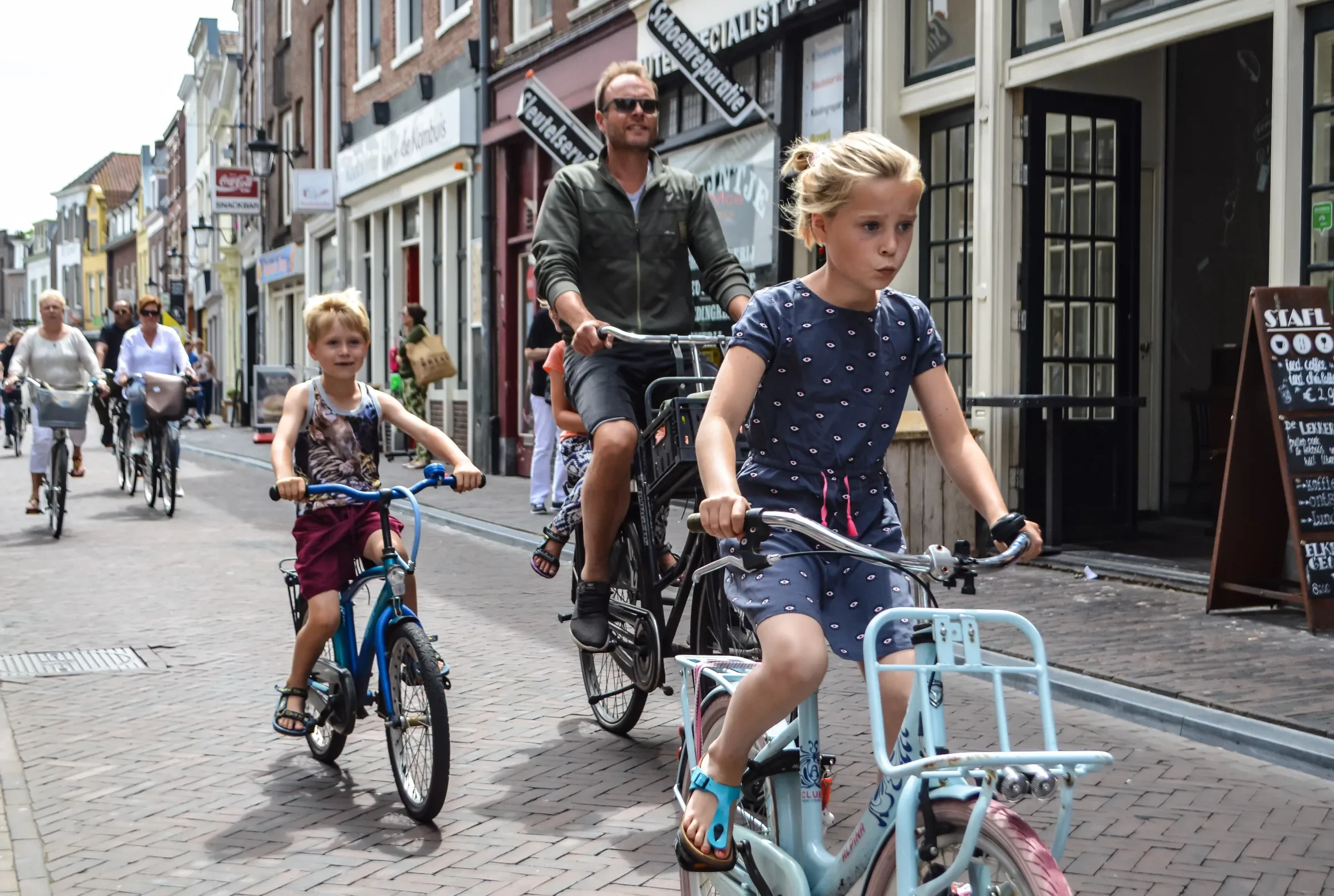
Is the Grass Really Greener on the Other Side?
At some point, almost every American who has thought seriously about moving abroad has asked themselves this question. And underneath it is a more honest one: am I running away from something, or running toward something? The truth, for most people who actually make the leap, is that it’s both — and that’s completely okay.
The Push and Pull of Leaving
Researchers who study migration talk about push factors — the things that make you want to leave — and pull factors — the things that draw you somewhere new. For Americans considering the Netherlands, the push factors are often deeply personal: healthcare costs, political anxiety, a sense that the pace of American life isn’t working for their family, or simply a feeling that something is missing. The pull factors are equally real: the Dutch quality of life, the work-life balance, the safety, the cycling culture, the proximity to the rest of Europe. Neither set of feelings is more legitimate than the other. Both are telling you something worth listening to.
The Anxiety is Normal — and So is the Doubt
Almost everyone who has made an international move will tell you the same thing: the period between deciding to go and actually going is the hardest part. The what-ifs multiply. You lie awake thinking about your parents aging back home, about your children losing their American friends, about whether your marriage can handle the stress of starting over. These anxieties are not signs that you’re making a mistake. They’re signs that you’re taking the decision seriously, which means you’re exactly the kind of person who tends to make it work.
Life Abroad: The Victories and the Frustrations
Here’s what no one tells you before you move: the victories and the frustrations often come from exactly the same places.
• The Dutch directness that feels rude at first becomes the thing you love most about your colleagues after six months
• The bureaucracy that drives you mad in year one becomes a funny story you tell at dinner parties in year three
• The loneliness of building a new social circle from scratch leads to friendships that feel more intentional and real than any you had before
• The bike commute you dreaded becomes the best part of your day
• The moment your child comes home speaking Dutch — unselfconsciously, fluently — and you realize they belong here now
Integration Doesn’t Happen All at Once
There’s a well-documented curve to expat life. The first few months are often a honeymoon — everything is new and exciting. Then comes the dip: the bureaucracy is exhausting, the language is harder than you expected, and you miss things you didn’t even know you’d miss. And then, slowly, something shifts. You develop routines. You find your neighborhood. You build your people. One day you realize you’re not visiting the Netherlands anymore — you live here. That transition from visitor to resident to local is one of the most profound experiences a person can have. It’s not always comfortable. But for the people it’s right for, it’s transformative.
So — Is the Grass Greener?
For many Americans who have made the move to the Netherlands, the honest answer is yes — not because the Netherlands is perfect, but because it turns out to be a better fit for who they are and how they want to live. The grass isn’t greener everywhere. But it might genuinely be greener for you, in this particular patch of the world. The only way to find out is to take the question seriously enough to actually explore it.
Ready to Explore Whether the Netherlands Might Be Home?
At Dutch Landing, Erik has been exactly where you are — standing on one side of the Atlantic, wondering what life might look like on the other. That personal experience, combined with 19 years of living and working in the Netherlands, means he understands both the excitement and the anxiety of this decision better than almost anyone. Book a free 30-minute discovery call at dutchlanding.nl and start the conversation.
Some Things to Know!
a) Work-life balance — the average Dutch work week is 35 hours, and workers receive 20+ paid vacation days per year compared to around 10 in the US.
b) Happiness ranking — the Netherlands ranks as the sixth happiest country in the world according to the World Happiness Report.
c) Quality of life ranking — the Netherlands holds a top-two ranking for quality of life in Europe. Invest in Holland
d) English fluency — a practical reassurance for hesitant Americans: over 90–93% of Dutch people speak English fluently, meaning newcomers can handle banking, healthcare, and daily life entirely in English while learning Dutch at their own pace.
e) Cost of living — overall cost of living in the Netherlands runs about 11% lower than in the US, and rent is roughly 19.5% cheaper than American equivalents.
f) The housing reality check — the Netherlands currently faces a shortage of approximately 400,000 homes, and in major cities renters compete with dozens to hundreds of other applicants per listing.
Do I Really Have to Give Up My American Citizenship to Become a Dutch Citizen?
For many Americans who have built a life in the Netherlands, Dutch citizenship eventually becomes an appealing goal — the right to vote, a European passport, and a permanent sense of belonging. But one question stops many people in their tracks: do I have to give up my U.S. passport to get it? The honest answer is: on paper, yes. In practice, it’s considerably more nuanced.
The Dutch Rule on Dual Nationality
The Netherlands generally does not permit dual nationality. When you naturalize as a Dutch citizen through the standard process, Dutch law requires you to renounce your existing citizenship — including your U.S. passport. This is a genuine requirement, not a formality. The Dutch government takes it seriously and will ask for proof of renunciation after naturalization in many cases.
The American Side of the Equation
Here’s where it gets interesting for Americans. The United States does not require its citizens to renounce U.S. citizenship when they naturalize elsewhere — and the U.S. government generally does not proactively strip citizenship for this reason. In practice, many Americans who naturalize as Dutch citizens and formally renounce their U.S. citizenship as part of the Dutch process find that the U.S. does not enforce that renunciation unless it is explicitly formalized through the U.S. State Department. However, this is a legally gray area and should never be relied upon without professional advice. US State Department guidelines for Dual Nationality.
The Exceptions: When Dual Nationality IS Permitted
Dutch law does allow dual nationality in several specific circumstances:
• Marriage to a Dutch citizen: If you naturalize after being married to a Dutch national for at least three years while living in the Netherlands, you are exempt from the renunciation requirement and can hold both passports legally.
• Long-term residence (Option procedure): Stateless persons and certain long-term residents may qualify for Dutch nationality via the option procedure, which in some cases permits retention of another nationality.
• Children born with dual nationality: Children born to one Dutch and one American parent automatically hold both nationalities from birth. This right is not affected by the general dual nationality restriction.
• Renunciation would cause genuine hardship: In limited circumstances, the IND may grant an exemption if renouncing your original nationality would result in serious personal, financial, or professional harm. These exemptions are rare and assessed case by case.
• Recognized refugee or stateless status: Those with formal refugee or stateless status are exempt from the renunciation requirement entirely.
How This is Routinely Treated in Practice
In reality, a significant number of Americans living in the Netherlands naturalize as Dutch citizens, go through the formal renunciation process as required by Dutch law, and then quietly continue to hold and use their U.S. passport. The U.S. government’s position is that citizenship is lost only when a citizen voluntarily performs an expatriating act with the specific intent to relinquish citizenship — and naturalization in another country alone does not automatically meet that bar under U.S. law. That said, this is a complex legal area and individual circumstances vary. Relying on this without obtaining proper legal advice from a dual-nationality specialist is a risk.
The Basic Requirements for Dutch Naturalization
The 2026 naturalization fee is €1,139 for a single applicant, €1,454 for a couple applying together, and €168 per minor child filing alongside a parent. IND Fees Costs of an Application
• Five years of continuous legal residence in the Netherlands immediately prior to application
• Valid residence permit throughout the five-year period
• Civic integration exam (inburgeringsexamen): Demonstrating Dutch language proficiency (A2 level) and knowledge of Dutch society.
• No serious criminal record in the four years preceding application
• Renunciation of current nationality (unless an exception applies)
Useful Links
IND: Becoming a Dutch national through Naturalisation
Government of the Netherlands: Becoming a Dutch Citizen
US State Department: Relinquishing U.S. Nationality
IRS: Relief Procedures for Certain Former Citizens
Thinking About the Long Game?
Dutch citizenship is a long-term goal — most Americans won’t be thinking about it until year four or five of their stay. But the decisions you make early, including which visa route you take and how you structure your residency, affect your eligibility timeline. At Dutch Landing, Erik helps Americans think through not just the immediate move, but the full arc of life in the Netherlands — including what Dutch citizenship could eventually mean for their family. Book a free 30-minute discovery call at dutchlanding.nl.
Legal Notice
The information in this article is provided for general informational purposes only and does not constitute legal advice. Dutch Landing is not a law firm and Erik is not a qualified legal professional. Nothing in this article should be relied upon as a substitute for independent legal advice tailored to your personal circumstances.
Immigration, nationality, and citizenship law — in both the Netherlands and the United States — is complex, subject to change, and highly dependent on individual situations. We have made every effort to ensure the accuracy of the information presented here at the time of publication, but we cannot guarantee its completeness or ongoing accuracy.
Before making any decisions regarding Dutch citizenship, renunciation of US nationality, or related matters, we strongly recommend consulting a qualified immigration lawyer or dual-nationality specialist registered in the Netherlands. For official and up-to-date requirements, please refer directly to the IND (Immigratie- en Naturalisatiedienst) and the US State Department
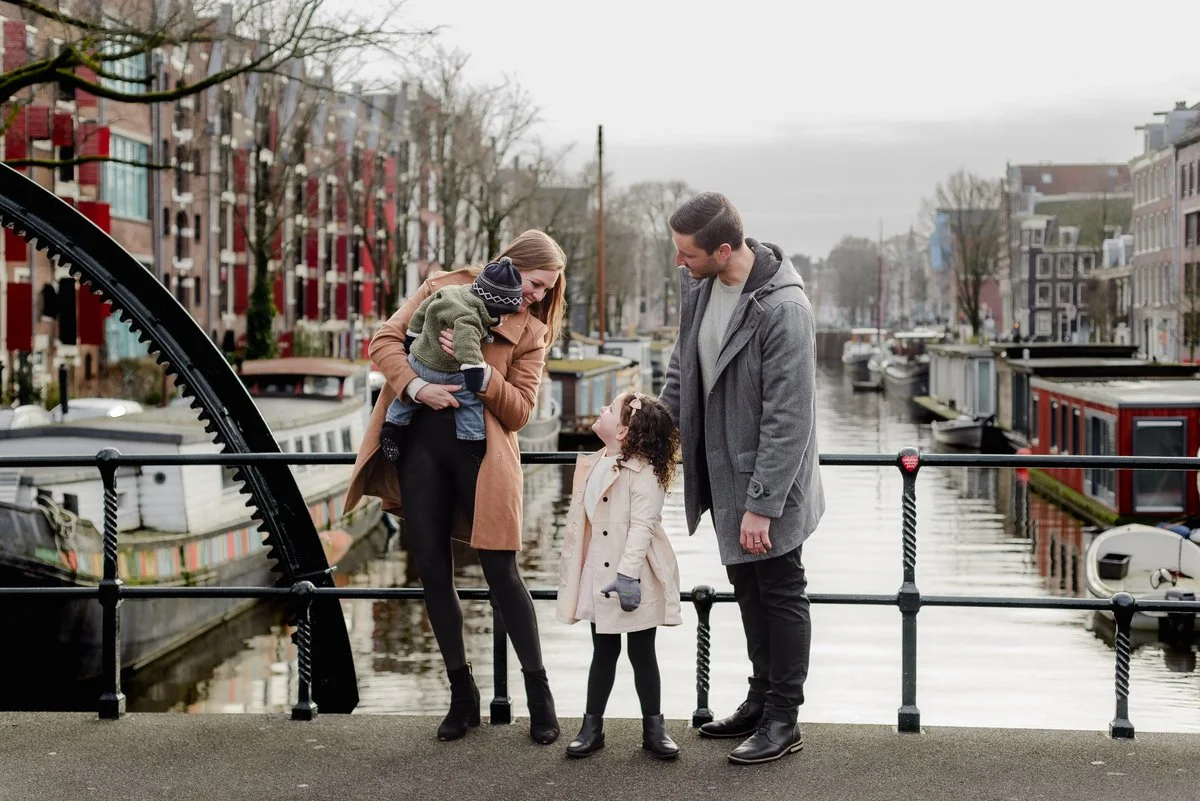
Is the DAFT Visa Right for Me and My Family?
The Dutch-American Friendship Treaty (DAFT) visa is the most popular route for self-employed Americans moving to the Netherlands — and for good reason. It’s accessible, relatively straightforward, and doesn’t require a Dutch employer. But when you’re moving as a family, the picture gets more nuanced. Here’s everything you need to know about whether DAFT works for your situation, including what it means for your spouse or partner.
DAFT Requirements at a Glance
Requirement
Detail
Nationality: U.S. citizen only
Minimum capital €4,500 in personal funds
Business registration KvK (Dutch Chamber of Commerce)
Business plan required — must demonstrate viable self-employment
Application via: IND (Dutch Immigration & Naturalisation Service)
Initial permit duration 2 years, renewable
Path to permanent residency after 5 years of legal residence
What the DAFT Visa Holder Can — and Cannot — Do
As the primary DAFT visa holder, your work rights are tied directly to your registered business:
• You can: Operate as a sole proprietor (ZZP’er), take on clients, invoice for services, and run your business freely within the Netherlands and internationally.
• You can: Work across most industries — consulting, design, technology, coaching, writing, academia, and more.
• You cannot: Take salaried employment with a Dutch employer under the DAFT visa alone. If you want to switch to employment, you’ll need a different permit.
• You must: Maintain an active, genuine business. If your KvK registration becomes dormant or your business ceases to operate, your permit is at risk at renewal.
What About Your Spouse or Partner?
This is the question most families ask first — and the answer is more favorable than many expect. A spouse or registered partner accompanying a DAFT visa holder to the Netherlands qualifies for a dependent residence permit (MVV/residence permit for family reunification). Crucially, this finalized dependent permit typically includes unrestricted work authorization in the Netherlands. Your spouse can take salaried employment, freelance, start their own business, or choose not to work at all — without needing a separate work permit. However the process is nuanced. The residence endorsement sticker — issued within one to two weeks of arrival — immediately grants the spouse the right to work self-employed in the Netherlands, but the right to take regular salaried employment is only granted at the final verdict of the DAFT application, which typically takes one to two months. This is important to note if plans are for the spouse to obtain immediate Dutch employment.
Important Caveats for Families
• Unmarried partners: Long-term unmarried partners may qualify, but the IND requires evidence of a genuine, lasting relationship (typically at least one year together). Documentation requirements are more extensive than for married couples.
• Children: Dependent children under 18 can join on a family reunification permit and have full access to Dutch state schools and international schools.
• Non-American spouses: If your spouse is not a U.S. citizen, they follow the standard Dutch family reunification rules rather than any DAFT-specific pathway. The process is the same but worth confirming with an immigration specialist.
• Renewal depends on the primary holder: The spouse’s permit is tied to yours. If your DAFT permit is not renewed, the family permits are affected too — keeping your business active is therefore a family responsibility, not just a personal one.
Is DAFT the Right Route for Your Family?
For most self-employed Americans moving as a couple or family, the DAFT visa is an excellent fit — flexible, relatively accessible, and offering strong work rights for both partners. The main risks are underestimating the business plan requirements and failing to maintain an active business at renewal. These are manageable with the right guidance.
Useful information
Current 2026 DAFT Fees: Applicant €423, Spouse €254, each Child €85
Family members receive Dutch residence permits and are free to work in any capacity in the Netherlands, including regular employment — giving them even broader work rights than the main DAFT applicant, who must remain self-employed.
Adult children (18+) of the main DAFT applicant cannot join under the family permit and need to apply for a separate visa; the same applies to parents of the applicant.
Since late February 2026, the IND has been sending compliance letters to some existing DAFT permit holders requesting extensive documentation proving they have been meeting their visa conditions.
Key documentation being requested to verify compliance includes:Evidence of Investment: Proof that the required €4,500 capital was deposited into a Dutch business bank account within six months of initial approval.
Active Business Operation: Proof that the business is active (e.g., contracts, invoices, client correspondence) rather than just a shell company.
Chamber of Commerce Registration: Valid KvK registration.
Personal Income Requirement: Evidence of sufficient personal income, with minimum income levels of approximately €1,735 per month (as of 2026) being expected, particularly for renewals.
Bookkeeping & Financials: Proper, current bookkeeping and, in some cases, an opening balance sheet.
Address Registration: Proof of address registration with the local municipality (BRP)
Useful Links
IND (Dutch Immigration & Naturalisation Service)
Dutch-American Friendship Treaty
KvK (Dutch Chamber of Commerce)
Applying for a Residency Permit
Belastingdienst (Dutch Tax Authority)
Ready to Find Out if DAFT Works for Your Situation?
Every family’s situation is different — business type, partner nationality, children’s ages, and timeline all affect which visa route makes most sense. At Dutch Landing, Erik has guided numerous American families through the DAFT process and can help you assess your eligibility, prepare a compelling business plan, and navigate the IND application with confidence. Book a free 30-minute discovery call at dutchlanding.nl.
Legal Notice
The information in this article is provided for general informational purposes only and does not constitute legal advice. Dutch Landing is not a law firm and Erik is not a qualified legal professional. Nothing in this article should be relied upon as a substitute for independent legal advice tailored to your personal circumstances.
Immigration, nationality, and citizenship law — in both the Netherlands and the United States — is complex, subject to change, and highly dependent on individual situations. We have made every effort to ensure the accuracy of the information presented here at the time of publication, but we cannot guarantee its completeness or ongoing accuracy.
Before making any decisions regarding Dutch citizenship, renunciation of US nationality, or related matters, we strongly recommend consulting a qualified immigration lawyer or dual-nationality specialist registered in the Netherlands. For official and up-to-date requirements, please refer directly to the IND (Immigratie- en Naturalisatiedienst) and the US State Department
The American Expat’s Guide to Dutch Taxes & the 30% Ruling
If you’re an American moving to the Netherlands as an employee of a Dutch or international company, one tax benefit stands above all others: the 30% ruling. It’s one of the most generous expat tax incentives in Europe — and one of the least understood. Here’s what it is, who qualifies, and why Americans need to think about it differently from everyone else.
What is the 30% Ruling?
The 30% ruling is a Dutch tax incentive for highly skilled workers recruited from abroad. If you qualify, your employer can pay 30% of your gross salary tax-free as a cost reimbursement for relocating to the Netherlands. In practice, this means you pay Dutch income tax on only 70% of your salary — a significant reduction, particularly for higher earners. The ruling is valid for up to five years.
Who Qualifies?
To be eligible for the 30% ruling, you must meet all of the following:
• Be recruited from outside the Netherlands by a Dutch employer
• Have lived more than 150km from the Dutch border in the 24 months prior to starting work
• Earn above the minimum salary threshold (€€48,013 gross in 2024, or €35,048 for under-30 graduates)
• Hold a specific expertise that is scarce in the Dutch labor market
The 30% Ruling at a Glance
Feature
Detail
Tax-free portion
30% of gross salary
Duration
Up to 5 years
Salary threshold (2024)
€46,107 gross/year
Who applies
Employer applies on behalf of employee
Processing time
Typically 8–10 weeks
The American Complication — Again
As with all Dutch tax matters, Americans face a layer of complexity that other nationalities don’t. Even with the 30% ruling reducing your Dutch tax burden, you are still required to file a U.S. tax return annually. The good news is that the Foreign Tax Credit and Foreign Earned Income Exclusion generally prevent genuine double taxation — but the interaction between the 30% ruling and U.S. tax obligations is nuanced. The 30% tax-free allowance is treated differently by the IRS than regular salary, which affects how you calculate your FEIE and FTC claims.
One Thing Many Americans Miss
The 30% ruling must be applied for within four months of starting your Dutch employment. Miss that window and you lose it entirely — there are no exceptions. Make sure your employer’s HR team is aware of the deadline before your first day. This is one of the most common and costly administrative mistakes American expat employees make.
Also, from 1 January 2027, the percentage will be reduced for everyone to a fixed rate of 27% for the remaining term.
Want to Know if You Qualify?
The 30% ruling can mean thousands of euros in annual tax savings — but only if you move quickly and understand how it interacts with your U.S. obligations. At Dutch Landing, Erik helps American employees assess their eligibility, coordinate with their employer’s HR team, and connect with dual-specialist tax advisors who know both systems inside out. Book a free 30-minute discovery call at dutchlanding.nl.
What is Dutch Culture Like for Expats?
The Netherlands consistently ranks among the happiest, most tolerant, and most progressive countries in the world. For most Americans, life here feels comfortable and familiar in many ways — but there are some genuine cultural differences that catch newcomers off guard. Understanding them early means fewer awkward moments and a much faster sense of belonging.
The Dutch Are Direct — Very Direct
This is the single cultural adjustment Americans mention most. The Dutch say exactly what they mean, without softening. If your idea isn’t good, a Dutch colleague will tell you plainly — not unkindly, just honestly. What feels blunt or even rude to American ears is simply normal communication here. Once you adjust, most Americans come to deeply appreciate it. There’s very little office politics, very little passive aggression, and almost no empty flattery.
Equality is Taken Seriously
Dutch culture places a strong emphasis on egalitarianism — the idea that no one is better than anyone else. Hierarchy is flat in most workplaces. Titles impress no one. Managers sit in open offices alongside their teams. This extends to social life too: conspicuous wealth is quietly frowned upon, and modesty is genuinely valued. The Dutch have a phrase for this — “Doe maar gewoon, dan doe je al gek genoeg” — roughly: “Just act normal, that’s already crazy enough.”
Social Life Takes Time to Build
Americans are often surprised to find that making Dutch friends takes longer than expected. The Dutch tend to have close, long-standing friendships from school and don’t automatically expand their social circles the way Americans might. This isn’t unfriendliness — it’s just a different social rhythm. Expat communities, sports clubs, and language classes are genuinely the fastest routes to connection.
Things Americans Tend to Love
• The bike culture — cycling everywhere is liberating and practical
• Work-life balance is protected; evenings and weekends are genuinely your own
• The gezelligheid — a Dutch concept of coziness and togetherness that’s hard to translate but easy to feel
• Exceptional public infrastructure, punctual trains, and well-maintained public spaces
• A strong culture of tolerance, openness, and personal freedom
Language: How Much Dutch Do You Actually Need?
The good news: virtually every Dutch person speaks fluent English, and daily life in Amsterdam or Utrecht is entirely manageable without Dutch. The bad news: not learning any Dutch creates an invisible ceiling — socially, professionally, and in terms of how at home you ultimately feel. Even basic Dutch signals respect and effort, and the Dutch respond warmly to it.
Want to Understand What Life Will Really Feel Like?
Cultural integration is one of the most underestimated parts of a successful relocation. At Dutch Landing, Erik doesn’t just help you navigate paperwork — he helps you understand what daily life actually looks and feels like as an American in the Netherlands, so you arrive with realistic expectations and hit the ground running. Book a free 30-minute discovery call at dutchlanding.nl.
How is Schooling Different in the Netherlands Compared to the American System?
For American families relocating to the Netherlands, schooling is often the most emotionally charged part of the move. Parents worry about disruption, language barriers, and whether their children will fall behind or fail to fit in. The good news: the Dutch education system is genuinely excellent. But it works very differently from what American kids are used to, and understanding those differences early makes the transition far smoother.
The Dutch School Structure at a Glance
Dutch System
American Equivalent
Basisschool (ages 4–12)
Elementary + Middle School (K–8)
VMBO (ages 12–16)
Vocational / Technical High School
HAVO (ages 12–17)
College-Prep High School
VWO (ages 12–18)
Advanced / AP High School
HBO (University of Applied Sciences)
Four-Year College
WO (Research University)
Research University / Graduate School
The Biggest Difference: Tracking Starts Early
The most significant cultural difference for American families is that Dutch children are tracked into academic pathways at around age 12 — far earlier than in the U.S. A teacher assessment and national test (the Eindtoets) determine whether a child heads toward VMBO, HAVO, or VWO. For American parents raised on the idea that every child is “college-bound,” this can feel jarring. In practice, all pathways lead to meaningful careers and further education — but the transition requires adjustment.
Dutch Schools vs. International Schools
American families typically choose between two options:
• Dutch state schools: Free, high quality, and excellent for long-term integration — but instruction is entirely in Dutch. Best for children under 10 who can acquire language quickly.
• International schools: Teach in English using the IB or American curriculum. Easier transition but costly — typically €10,000–25,000 per year per child. Found in Amsterdam, The Hague, Utrecht, and Eindhoven.
One Thing American Parents Consistently Appreciate
Dutch schools place a strong emphasis on child wellbeing, play, and independence — less homework, less testing pressure, and more emphasis on social development than most American schools. Children who make the transition often thrive in ways their parents didn’t expect.
Not Sure Which School Path is Right for Your Child?
Choosing between Dutch state schools and international schools is one of the most consequential decisions expat families make — and it depends heavily on your child’s age, language ability, and how long you plan to stay. At Dutch Landing, Erik helps families think through the options clearly and identify the best schools in their target city. Book a free 30-minute discovery call at dutchlanding.nl.
How Are Taxes in the Netherlands Different from the U.S. System — and How Does This Affect Expats on DAFT Visas?
Taxes are where many American expats get blindsided. The Netherlands has a well-functioning tax system, but it works very differently from what you’re used to — and Americans face a unique complication that citizens of almost no other country deal with: you still owe U.S. taxes after you leave. Here’s what DAFT visa holders specifically need to understand.
How the Dutch Tax System Works
The Netherlands uses a “box” system to categorize income. Box 1 covers income from work and home ownership, taxed progressively up to 49.5%. Box 2 covers income from substantial business interests. Box 3 covers savings and investments, taxed on an assumed yield rather than actual returns. As a DAFT visa holder operating as a ZZP’er (sole proprietor), virtually all of your income falls in Box 1. You file annually through the Belastingdienst — the Dutch tax authority — using your DigiD.
The American Complication: Citizenship-Based Taxation
The United States is one of only two countries in the world that taxes its citizens based on citizenship rather than residency. This means that even living and working full-time in the Netherlands, you are still legally required to file a U.S. federal tax return every year. Most Americans won’t owe U.S. tax — the Foreign Earned Income Exclusion (FEIE) and Foreign Tax Credit (FTC) exist precisely to prevent double taxation — but the filing obligation never goes away.
What DAFT Visa Holders Specifically Need to Know
• Self-employment tax still applies in the U.S.: Even if you owe no U.S. income tax thanks to the FEIE, self-employed Americans abroad may still owe U.S. self-employment tax (Social Security and Medicare) on their earnings.
• The Dutch-American tax treaty helps — but has limits: A bilateral tax treaty between the U.S. and Netherlands reduces double taxation, but it doesn’t eliminate all U.S. obligations for the self-employed.
• FBAR and FATCA reporting: If you hold more than $10,000 in Dutch bank accounts, you must report this annually to the U.S. Treasury via an FBAR filing. Failure to do so carries significant penalties.
The Most Important Practical Advice
Hire an accountant who specializes in U.S. expat taxation — not just a Dutch accountant, and not just a U.S. accountant. You need someone who understands both systems simultaneously. The cost is modest compared to the penalties for getting it wrong, and the peace of mind is invaluable.
Feeling Overwhelmed by the Tax Picture?
Tax complexity is one of the most common reasons Americans hesitate to make the move — and one of the first things Erik addresses in a Dutch Landing consultation. He can help you understand what you’re facing, connect you with the right expat tax professionals, and make sure nothing falls through the cracks. Book a free 30-minute discovery call at dutchlanding.nl.
What Are the Real Housing Challenges in the Netherlands for Expats?
The Netherlands has a housing crisis — and as an American expat, you’ll feel it immediately. Rents are high, availability is tight, and the rental market moves faster than almost anywhere in the world. Walking in unprepared is one of the most common mistakes newcomers make. Here’s what you’re actually up against, and how to navigate it.
The Market is Genuinely Competitive
In Amsterdam especially, good rental properties receive dozens of applications within hours of listing. Viewings are often group events with 20 or more people touring the same apartment. Landlords hold significant leverage and frequently request months of rent upfront, proof of income at three to four times the monthly rent, and a Dutch employer or guarantor. For Americans arriving without a local employment history, this creates an immediate catch-22.
The Biggest Challenges for American Expats
• No Dutch credit history: Landlords and agencies often run credit checks through Dutch systems. As a newcomer, you simply don’t exist in these databases yet.
• Income verification: If you’re self-employed, freelancing on a DAFT visa, or between jobs, proving income to a landlord’s satisfaction is genuinely difficult.
• Short-term options are expensive: Furnished short-term rentals — your likely first step — can run 30–50% more than unfurnished long-term equivalents.
• Scams are widespread: The Dutch rental market has a well-documented problem with fraudulent listings targeting international newcomers who haven’t learned to spot the red flags.
Strategies That Actually Work
Start your housing search before you arrive. Use reputable platforms like Funda, Pararius, and Kamernet. Avoid listings that ask for payment before viewing. If your employer is sponsoring your move, ask them to provide an income guarantee letter — this significantly improves your application. And seriously consider Utrecht, The Hague, or Haarlem as alternatives to Amsterdam; the market is less brutal and the quality of life is comparable.
Don’t Navigate the Housing Market Alone
Housing is one of the areas where local knowledge makes the biggest difference. At Dutch Landing, Erik helps Americans understand which neighborhoods suit their lifestyle, which platforms to trust, and how to put together a compelling rental application as a newcomer. Book a free 30-minute discovery call at dutchlanding.nl.
Amsterdam vs. Utrecht vs. The Hague: Which City is Right for American Expats?
One of the first decisions Americans face when relocating to the Netherlands is where to actually live. The country is small — you can cross it by train in under two hours — but each major city has a distinct personality, price point, and lifestyle. Here’s an honest comparison of the three cities where most American expats end up.
Amsterdam: The Obvious Choice — But Not for Everyone
Amsterdam is the most international city in the Netherlands, with a large expat community, abundant English-language services, and a thriving cultural scene. It’s the natural landing spot for Americans working in tech, finance, or the creative industries.
The trade-offs are real, though:
• Housing is the most expensive in the country — and genuinely competitive to find
• The city can feel crowded and touristy, especially in the center
• Best for: singles, couples, and professionals without school-age children
Utrecht: The Sweet Spot
Utrecht is consistently rated one of the most livable cities in Europe — and it’s the top choice among American families relocating to the Netherlands. It’s a 25-minute train ride from Amsterdam, has excellent international schools, a strong university presence, and noticeably lower rents.
• Walkable, bike-friendly, and genuinely community-oriented
• Strong international school options including the European School
• Best for: families with children, academics, and those who want Amsterdam access without Amsterdam prices
The Hague: The Diplomatic City
The Hague is home to the Dutch government, numerous international organizations, and one of the largest expat communities in Europe. If you’re arriving on a diplomatic posting, working for an NGO or multinational, or simply want more space and a slower pace, The Hague deserves serious consideration.
• Home to the American School of The Hague, one of the top international schools in Europe
• More spacious housing at lower prices than Amsterdam, with easy beach access via Scheveningen
• Best for: diplomats, international organization employees, and families wanting a quieter base
So Which City Should You Choose?
The honest answer is: it depends on your job, your family situation, your budget, and the kind of daily life you want. Most Americans are surprised to discover that Utrecht and The Hague often suit their actual needs better than Amsterdam — once someone walks them through the real trade-offs.
Not Sure Which City Fits Your Life?
Choosing the right city is one of the most important decisions you’ll make before your move — and it’s one of the first things Erik covers in a Dutch Landing consultation. With 19 years of experience living and working across the Netherlands, he can help you match the right city to your specific situation. Book a free 30-minute discovery call at dutchlanding.nl.